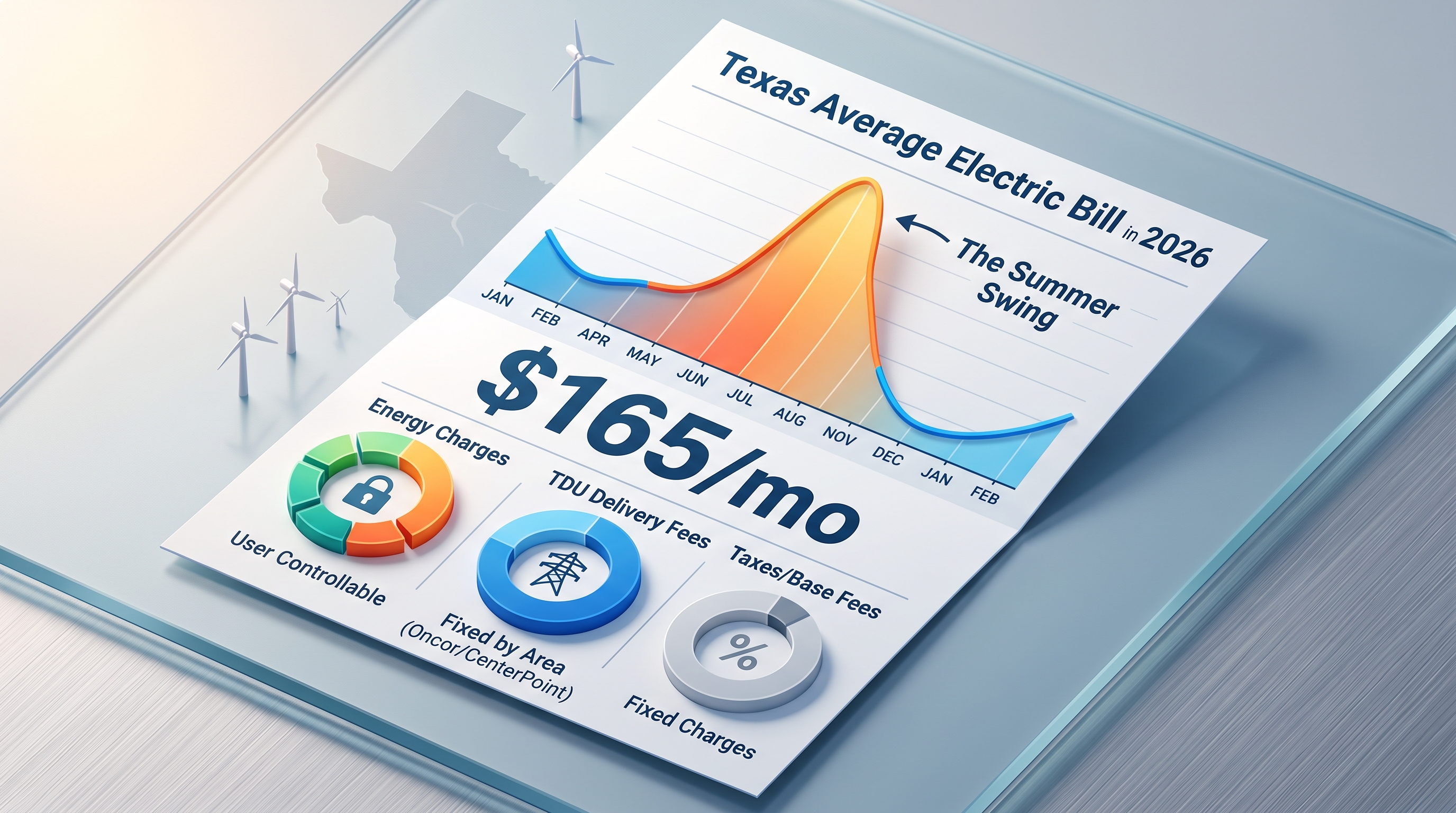
The average Texas household pays between $150 and $200 per month for electricity, though bills in deregulated areas vary widely based on your plan, usage, and TDU service territory. Understanding how your rate breaks down - energy charges, TDU delivery fees, and monthly service fees - is the first step toward trimming your bill.
If you just opened your electricity bill and thought "that can't be right," you're not alone. Texans pay some of the most variable electricity bills in the country - and the range between what a savvy shopper pays and what everyone else pays is enormous.
So what's normal? Let's dig into the numbers.
The Average Texas Electric Bill in 2026
The average residential electricity bill in Texas lands between $150 and $180 per month when you look at the full year. But that number hides a huge amount of variation.
Your actual bill depends on:
- Where you live - Houston (CenterPoint territory) tends to run higher TDU charges than Dallas (Oncor)
- Your home's size and age - a 3,000 sq ft home from the 1990s with poor insulation will cost dramatically more than a 1,500 sq ft home built to modern code
- Your electricity plan - this is the single biggest variable most people overlook
- The season - summer bills in Texas can easily hit double or triple your winter bills. When extreme cold does hit, heating costs and winter preparedness become critical
Summer vs. Winter: The Texas Swing
Texas electricity bills follow a predictable seasonal pattern, driven almost entirely by air conditioning. A smart thermostat can help reduce unnecessary cooling.
| Month | Typical Usage | Typical Bill |
|---|---|---|
| January-March | 800-1,100 kWh | $90-$140 |
| April-May | 1,000-1,300 kWh | $110-$160 |
| June | 1,400-1,800 kWh | $160-$220 |
| July-August | 1,800-2,500 kWh | $220-$400+ |
| September-October | 1,200-1,600 kWh | $140-$200 |
| November-December | 900-1,200 kWh | $100-$150 |
This seasonal swing is exactly why comparing plans at a single usage level (like PowerToChoose.org does at 1,000 kWh) can be misleading. A plan that's cheap at 1,000 kWh might be expensive at 2,000 kWh thanks to tiered pricing or disappearing bill credits.

What's Actually on Your Bill
Your electricity bill has three main components, and most people only pay attention to one of them:
1. Energy Charges (The Part You Control)
This is the per-kWh rate from your Retail Electricity Provider (REP) - companies like TXU, Reliant, Gexa, Rhythm, and dozens of others. This is the only part you can change by switching plans.2. TDU Delivery Charges (Fixed by Your Area)
Your Transmission and Distribution Utility (Oncor, CenterPoint, AEP, or TNMP) charges for maintaining the power lines and delivering electricity to your home. These charges are the same regardless of which REP you choose. They typically add 4-6 cents/kWh to your effective rate.3. Taxes, Fees, and Base Charges
Monthly base fees range from $0 to $9.95 depending on your plan. Taxes and regulatory fees add another small percentage. Some plans also include renewable energy certificate costs.How to Tell If You Are Overpaying
The most reliable way to check is to calculate your current all-in rate: total energy charges, plus TDU delivery charges, plus monthly fees, divided by total kWh used, then compare that number against what is currently available in your TDU service area at the same usage level.
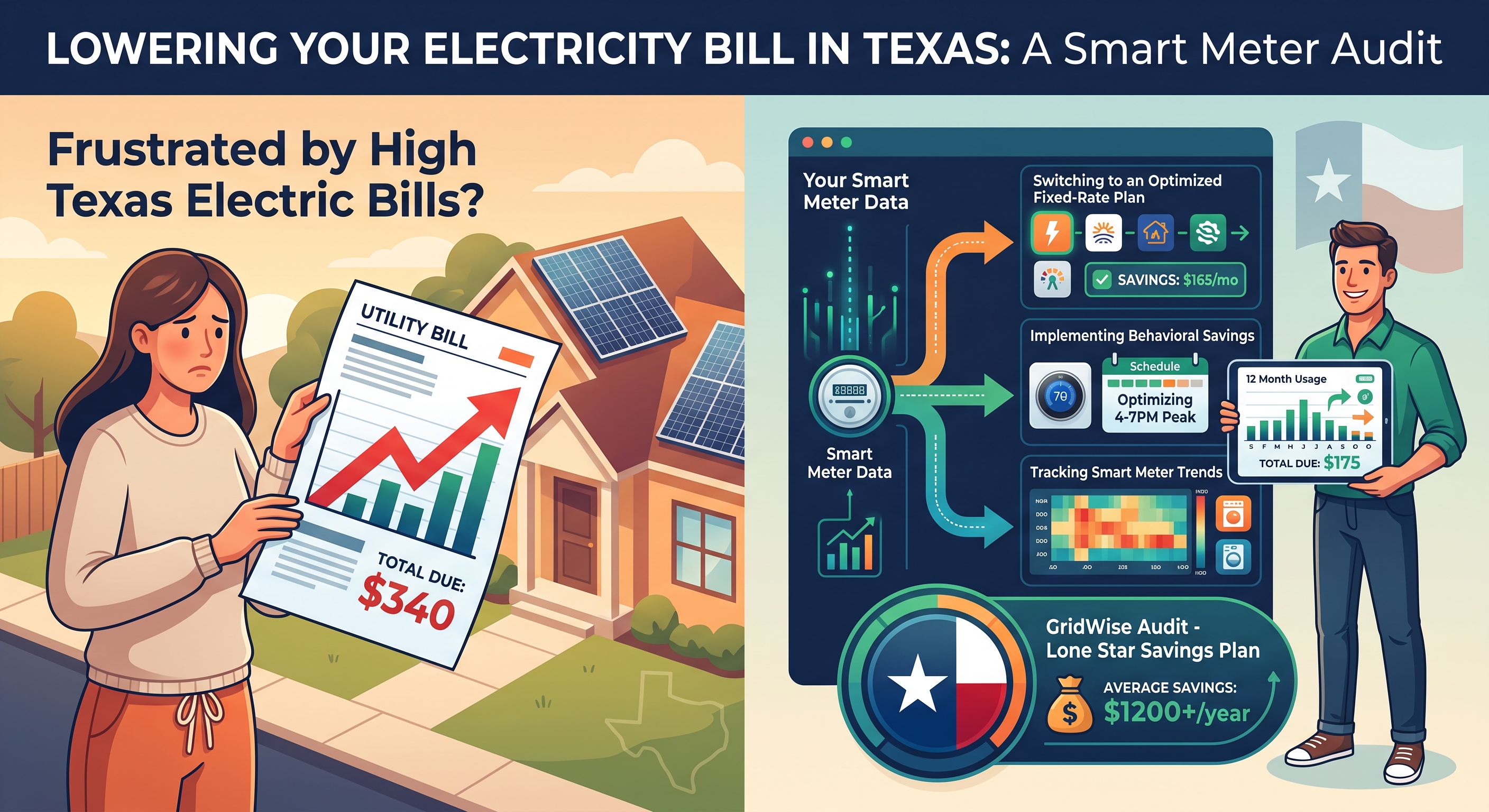
As of mid-2026, competitive all-in rates at 1,000 kWh run roughly 8 to 10 cents per kWh in most Texas service areas, though actual availability varies by contract term length and plan type. If your effective rate comes in more than 2 to 3 cents above that current competitive range, there is likely a better option available for your usage pattern. For current benchmarks by TDU service area, see Texas electricity rates today, and for guidance on timing a switch around your existing agreement, see what happens when your contract expires. WattTrim runs this comparison automatically using your actual Smart Meter data, so you can see your real all-in rate against the current market rather than estimating it by hand.
Put This Knowledge to Work
Compare your current plan against 1,500+ options across all 6 Texas TDU service areas, including exclusive broker-negotiated rates not found on PowerToChoose.org. Always free.
Trim My BillGridWise Audit shows the plans. WattTrim audits your bill to find your savings.

Keep Reading


Frequently Asked Questions
What is the average electric bill in Texas?
The average Texas residential bill is about $150 to $180 per month across a full year. Actual costs vary by home size, weather, usage, electricity plan, and TDU service territory.
Why is my Texas electric bill much higher in summer?
Air conditioning drives Texas summer usage sharply higher, especially in July and August. Larger or older homes can use 1,800 to 2,500 kWh in those months, making bills of $220 to $400 or more common.
How can I tell if I am overpaying for electricity in Texas?
Divide your total bill, including fees and delivery charges, by your total kWh to calculate your all-in rate. Compare that rate with current offers in your TDU area at your actual usage rather than relying on an advertised rate at one benchmark.