Understanding Texas TDU Delivery Charges: The Unavoidable Cost of Power

TDU delivery charges pay for the physical network that brings electricity to your home: the poles, wires, transformers, substations, meters, and crews that maintain them. Your local utility territory determines these charges, not the Retail Electric Provider (REP) you choose. They can make up a substantial share of a Texas electricity bill, so they need to be included whenever you compare plans.
In deregulated parts of Texas, your total bill generally has two parts: the retail electricity charge from your REP and the regulated delivery charge from your Transmission and Distribution Utility. Shopping only by an advertised energy rate can hide an important part of the final cost.
What is a TDU?
TDU stands for Transmission and Distribution Utility. You may also see the term TDSP, which means Transmission and Distribution Service Provider. In Texas electricity shopping, TDU and TDSP are interchangeable terms.
Unlike your retail provider, which manages your plan, account, and bill, the TDU operates the physical utility infrastructure for a defined geographic territory. No matter which REP you choose, your TDU stays the same for that address. The TDU owns, services, and manages infrastructure including:
- High-voltage transmission lines, neighborhood poles, and distribution wires.
- Substations and transformers.
- Your home's advanced digital smart meter.
- Emergency line crews that restore service after storms and outages.
- Oncor: Serving the Dallas-Fort Worth metroplex, Waco, and parts of West Texas.
- CenterPoint Energy: Serving the greater Houston area and Galveston.
- Texas-New Mexico Power (TNMP): Serving scattered areas of North, West, and Gulf Coast Texas.
- AEP Texas Central: Serving Corpus Christi, the Rio Grande Valley, and much of South Texas.
- AEP Texas North: Serving Abilene, San Angelo, and parts of the Texas Panhandle.
- Lubbock Power & Light (LP&L): Serving the Lubbock area as it transitions from a municipal utility to deregulated ERCOT service.
Current TDU delivery charges by territory
The delivery rates below apply to standard residential service in each territory. The per-kWh amount is charged for every kilowatt-hour delivered, and the fixed charge applies each billing month.
| TDU territory | Delivery charge | Fixed monthly charge |
|---|---|---|
| Oncor | 6.8673 cents/kWh | $4.06/mo |
| CenterPoint | 6.5333 cents/kWh | $4.90/mo |
| AEP Central | 5.6898 cents/kWh | $3.24/mo |
| AEP North | 5.5751 cents/kWh | $3.24/mo |
| TNMP | 7.7710 cents/kWh | $7.56/mo |
| LP&L | 6.3120 cents/kWh | $0.00/mo |
The two dimensions of TDU pricing
TDU delivery fees are regulated pass-through charges. Retail electric companies list and collect them on the bill, but the delivery charges are set for the territory rather than chosen by the REP. Pricing generally has two parts.
1. The fixed monthly charge
This is a flat dollar amount charged each billing cycle, regardless of how much electricity your home uses. It helps fund the standing cost of maintaining an available connection to the grid.
2. The volumetric delivery charge
This is a per-kWh fee. Every kilowatt-hour delivered to your home is assessed at the territory's delivery rate. Because it rises with usage, using less electricity reduces this portion of your TDU expense.
For example, a home in Oncor territory using 1,000 kWh would have approximately $60.30 in volumetric delivery charges plus the $4.06 monthly fixed charge, before accounting for its retail energy charge and any applicable taxes or other bill items.

Where TDU charges appear on your EFL and bill
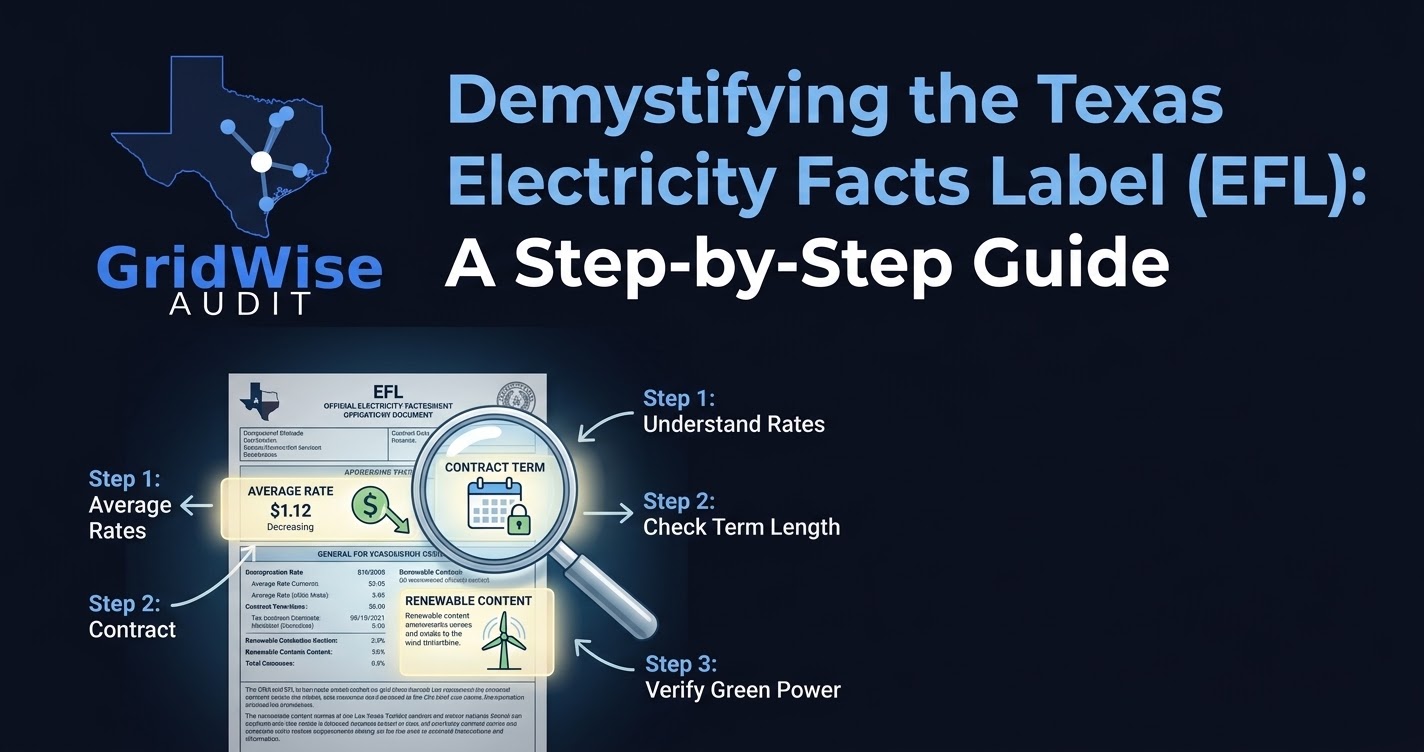
Before enrolling, look at the plan's Electricity Facts Label (EFL). It should identify the delivery charges applicable to the plan's TDU territory, often as a monthly charge plus a cents-per-kWh amount. The EFL also shows the plan's estimated average price at specific usage levels, which incorporates the required delivery charges for that territory.
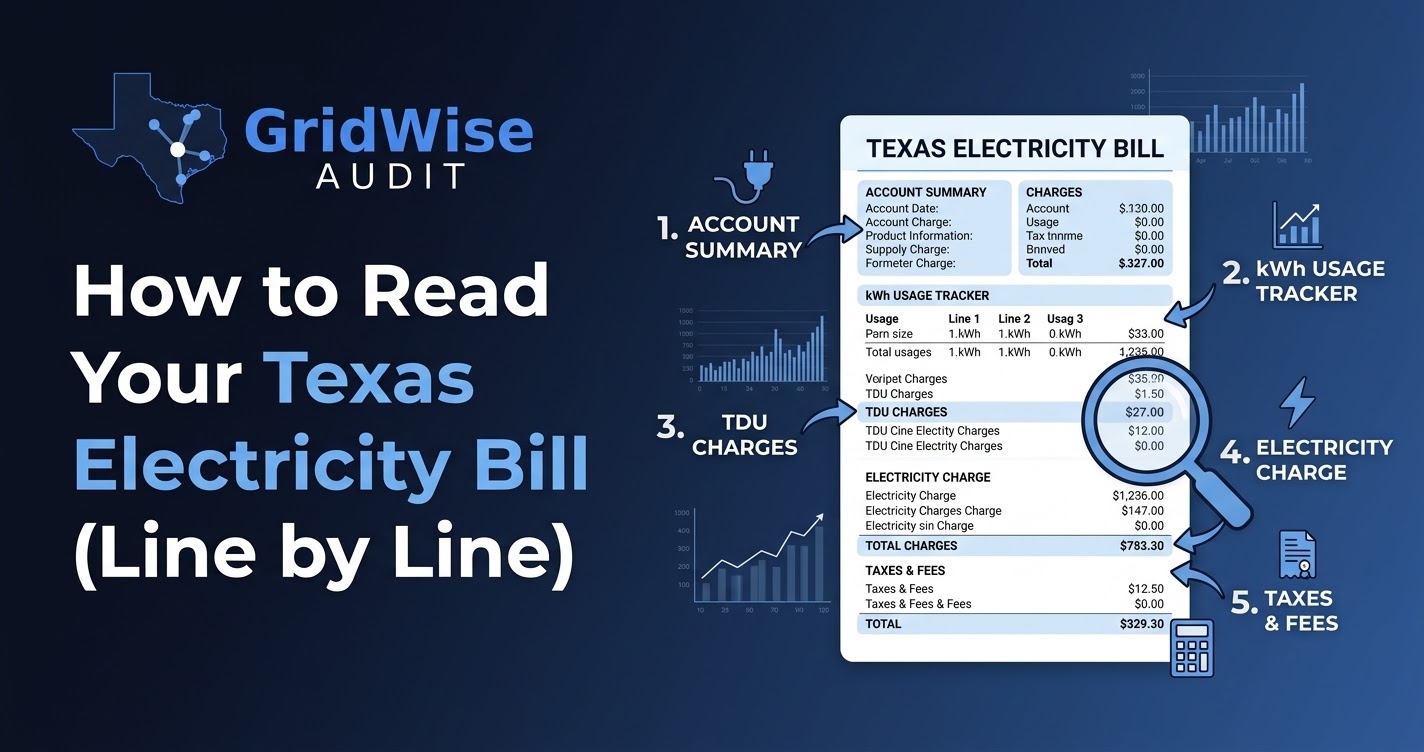
On your monthly bill, TDU charges may appear as separate delivery line items, or they may be combined into the total charges collected by your REP. The wording varies by provider, but the underlying territory charges should match the TDU schedule in effect during the billing period. Read the full breakdown with our guide to reading a Texas electricity bill, and learn what to check before enrolling in our Texas EFL guide.
A plan with a lower advertised energy charge is not automatically less expensive if its EFL is being viewed for a different territory or if its pricing structure changes at your real usage level. Compare the total estimated bill, not only the retail rate.
Why do TDU delivery fees change?
A fixed-rate electricity plan fixes the retail energy portion of your contract. It does not lock delivery charges. The Public Utility Commission of Texas (PUCT) reviews and approves TDU rate changes, which can take effect as the regulated delivery schedule is updated.
Those updates can support items such as:
- Grid maintenance, fortification, and expansion.
- New infrastructure needed for growth and electricity demand.
- Storm recovery and rebuilding after severe weather.
- Metering, substations, and other distribution-system investments.
How to compare plans when delivery charges cannot be avoided
You cannot choose a lower-cost TDU for the same address. All REPs serving that territory use the same regulated delivery schedule. What you can control is the retail plan you select and how well its pricing fits your household's actual usage.
GridWise covers all six TDU territories with 1,500+ plans in its comparison database. Start with your address and real usage, then compare total estimated costs across eligible plans. This helps you spot plans with bill credits, usage thresholds, or tiers that can distort a simple cents-per-kWh comparison.
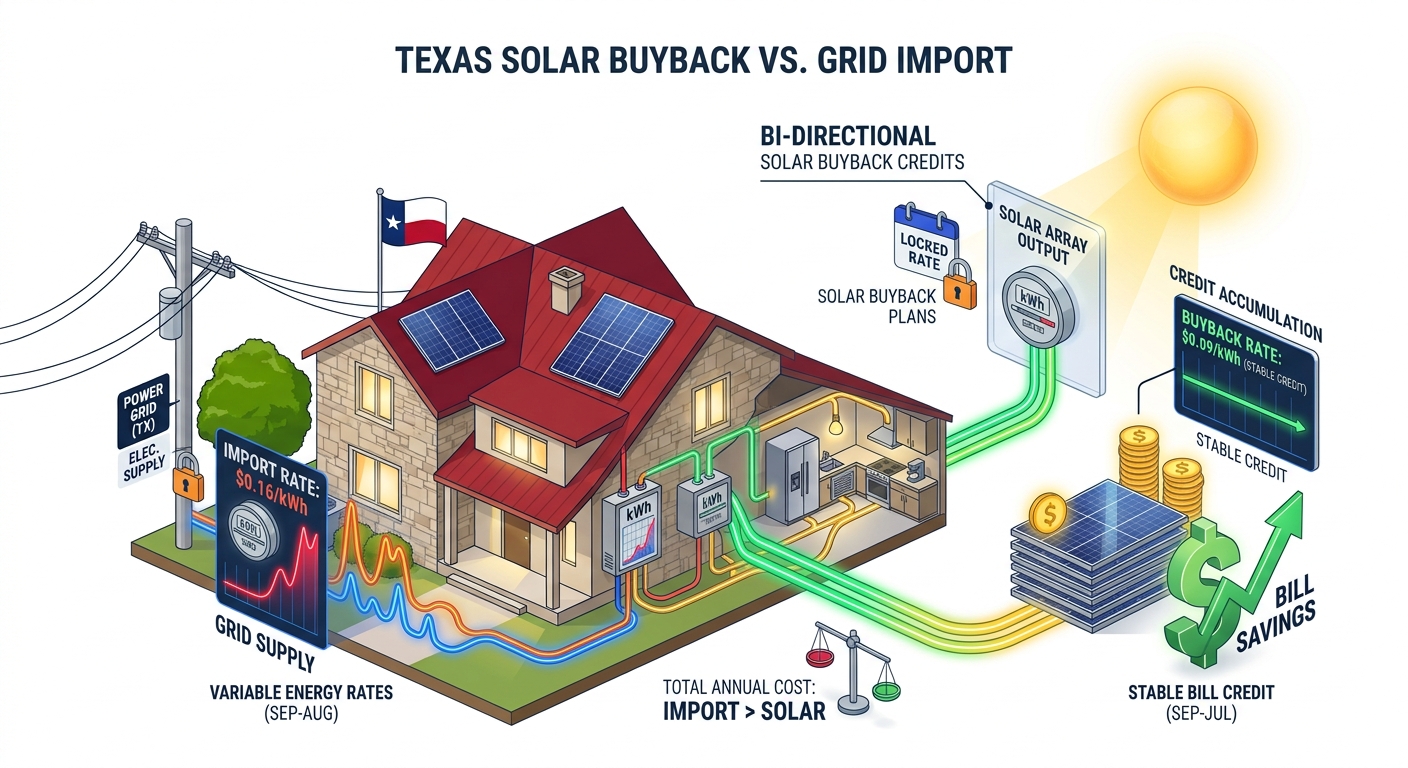
If you generate solar power, delivery charges can still matter to your economics. Review available solar buyback plans alongside your production and usage pattern. You can also upload your bill to work from the details on your current account rather than an estimate.
Balancing the equation
TDU delivery charges are unavoidable, but an expensive electricity plan is not. The practical response to delivery-cost changes is to evaluate the full bill using your actual usage, including both the retail and regulated components. Selecting a straightforward plan that matches your home's usage pattern is the best defense against avoidable retail costs.
Put This Knowledge to Work
Compare your current plan against 1,500+ options across all 6 Texas TDU service areas, including exclusive broker-negotiated rates not found on PowerToChoose.org. Always free.
Trim My BillGridWise Audit shows the plans. WattTrim audits your bill to find your savings.

Keep Reading
Frequently Asked Questions
What are TDU charges in Texas?
TDU charges are regulated fees for delivering electricity over the local grid to your home. They pay for the poles, wires, transformers, meters, substations, maintenance, and outage restoration operated by your territory's TDU. They usually include a fixed monthly charge and a per-kWh delivery charge.
Are TDU fees the same for every electricity provider?
Yes. For the same address and TDU territory, regulated TDU delivery charges are the same regardless of which REP supplies your plan. Retail rates, plan terms, bill credits, and other provider pricing can differ.
Why did my delivery charge change on a fixed-rate plan?
Your fixed-rate plan generally fixes the REP's energy price, not TDU delivery charges. If the PUCT approves a new delivery schedule for your territory, the updated pass-through amount can change your bill during the contract term.
Which TDU serves my address?
Your address determines your TDU. Oncor serves much of North and West Texas, CenterPoint serves much of the Houston area, AEP Central and AEP North serve parts of South, Central, and West Texas, TNMP serves several separate areas, and LP&L serves the Lubbock area. Check the GridWise database or the relevant territory page to identify plans for your address.
Can I avoid TDU charges?
No. If your home receives electricity through the grid in a competitive Texas territory, TDU charges are mandatory. You can reduce the per-kWh portion by lowering usage, but you cannot shop for a different TDU or eliminate the fixed charge through a different REP.