Solar Buyback Plans in Texas: What You Need to Know (2026)
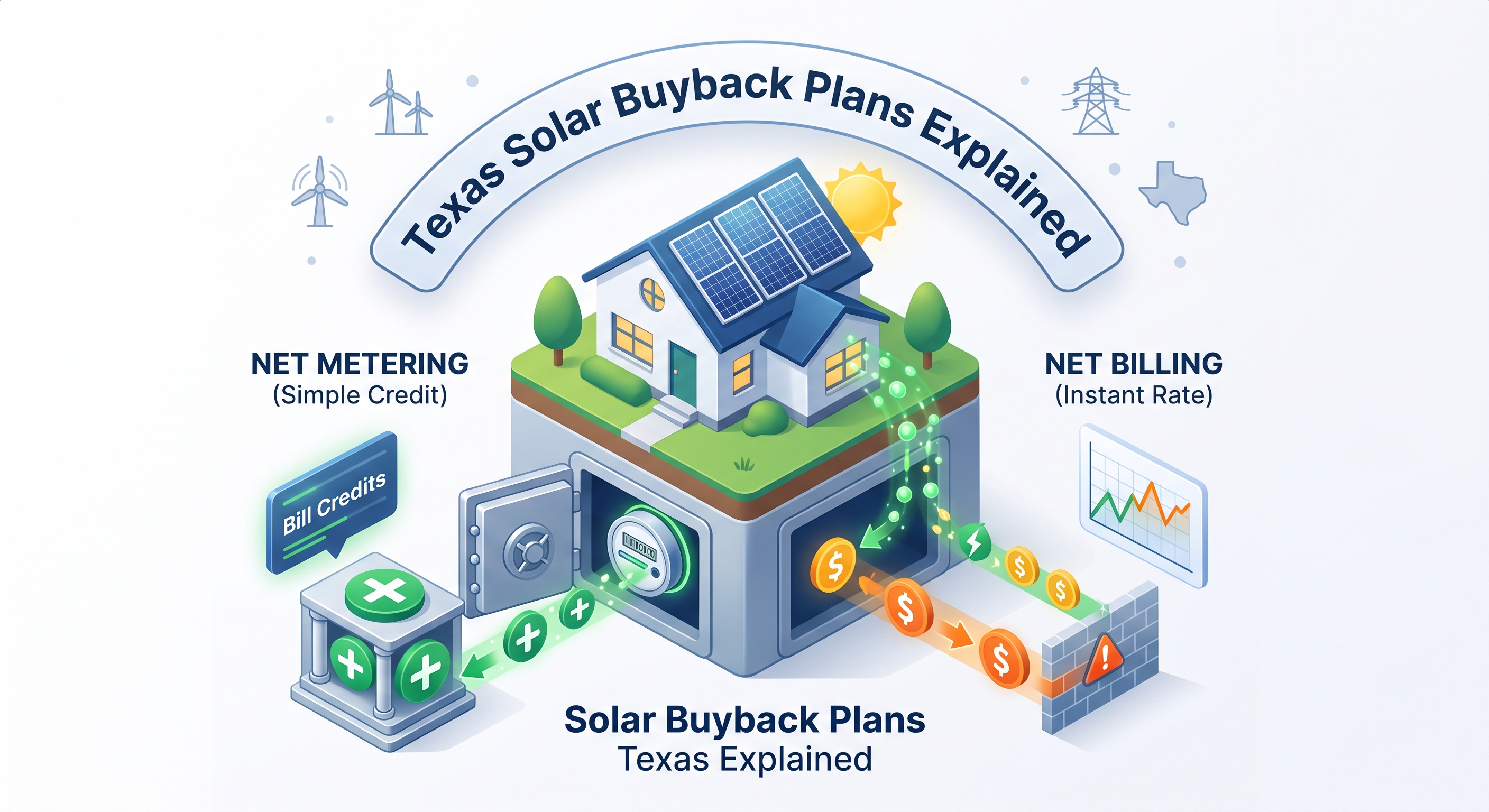
Texas solar buyback plans credit exported electricity at terms set by the REP, and the key comparisons are the import rate, export rate, monthly base fee, contract length, and TDU delivery charges on imported power. A battery can increase self-consumption and reduce imports, but the best plan still depends on the home's actual seasonal import and export pattern.
If you have solar panels on your Texas home, you're generating electricity during the day and exporting the excess back to the grid. The question is: how much is your provider paying you for that exported power?
The answer depends entirely on which solar buyback plan you're on - and the difference between a good one and a bad one can be hundreds of dollars a year.
How Solar Buyback Works in Texas
Texas doesn't have traditional "net metering" like some states. Instead, retail electric providers (REPs) offer solar buyback plans that credit you for exported electricity at a rate they set. With over 196 solar buyback plans currently available across all six Texas TDU service areas, the range of buyback terms varies widely.
Here's the basic flow:
- Your panels generate electricity during the day
- Your home uses what it needs first
- Excess power flows back to the grid - this is your export
- Your provider credits you for that export at the buyback rate
- At night or on cloudy days, you import power from the grid at your normal rate
Types of Buyback Plans
1:1 Buyback (True Net Metering)
The best deal for solar homeowners. You get credited at the same rate you pay for imports. If your import rate is 12 cents/kWh, your exports are worth 12 cents too.
These plans are becoming rarer as providers adjust to the growth of rooftop solar in Texas, but a few still exist.
Reduced Buyback
More common today. You pay, say, 12 cents/kWh for imports but only get 7 or 8 cents for exports. Still valuable, but the gap between import and export rates matters - especially if you export a lot.
Bill Credit Plans
Some plans give you a flat dollar credit per month or per kWh exported, rather than a direct rate offset. Read the fine print to understand exactly how the credit applies. For a deeper look at whether bill credit structures work in your favor, see our guide on whether a solar bill swap is worth it.
GridWise displays real-time ERCOT settlement-based wholesale averages so you can see exactly what solar buyback credits are worth in your area. Compare solar buyback plans with transparent wholesale pricing on the Solar Plans page.
What to Look For
Import Rate vs. Export Rate
The most important comparison. A plan with a 10-cent import rate and 10-cent buyback is better than a plan with an 8-cent import rate and 4-cent buyback - if you export a meaningful amount.
The exact math depends on your import/export ratio, which varies by system size, home usage, and season.
Monthly Base Fee
Some solar buyback plans charge a monthly "grid access" or "solar rider" fee - typically $10-$25/month. This eats into your savings. A plan with a slightly higher rate but no base fee might come out ahead.
Contract Length
Solar buyback plans follow the same terms as regular plans - 6 months, 12 months, 24 months. Longer contracts lock in your buyback rate, which can be valuable if rates are dropping.
TDU Delivery Charges
Just like non-solar plans, delivery charges apply to your imported electricity. These are the same regardless of provider across all six Texas TDUs (Oncor, CenterPoint, AEP Central, AEP North, TNMP, and LP&L). See our TDU delivery charges guide for details.
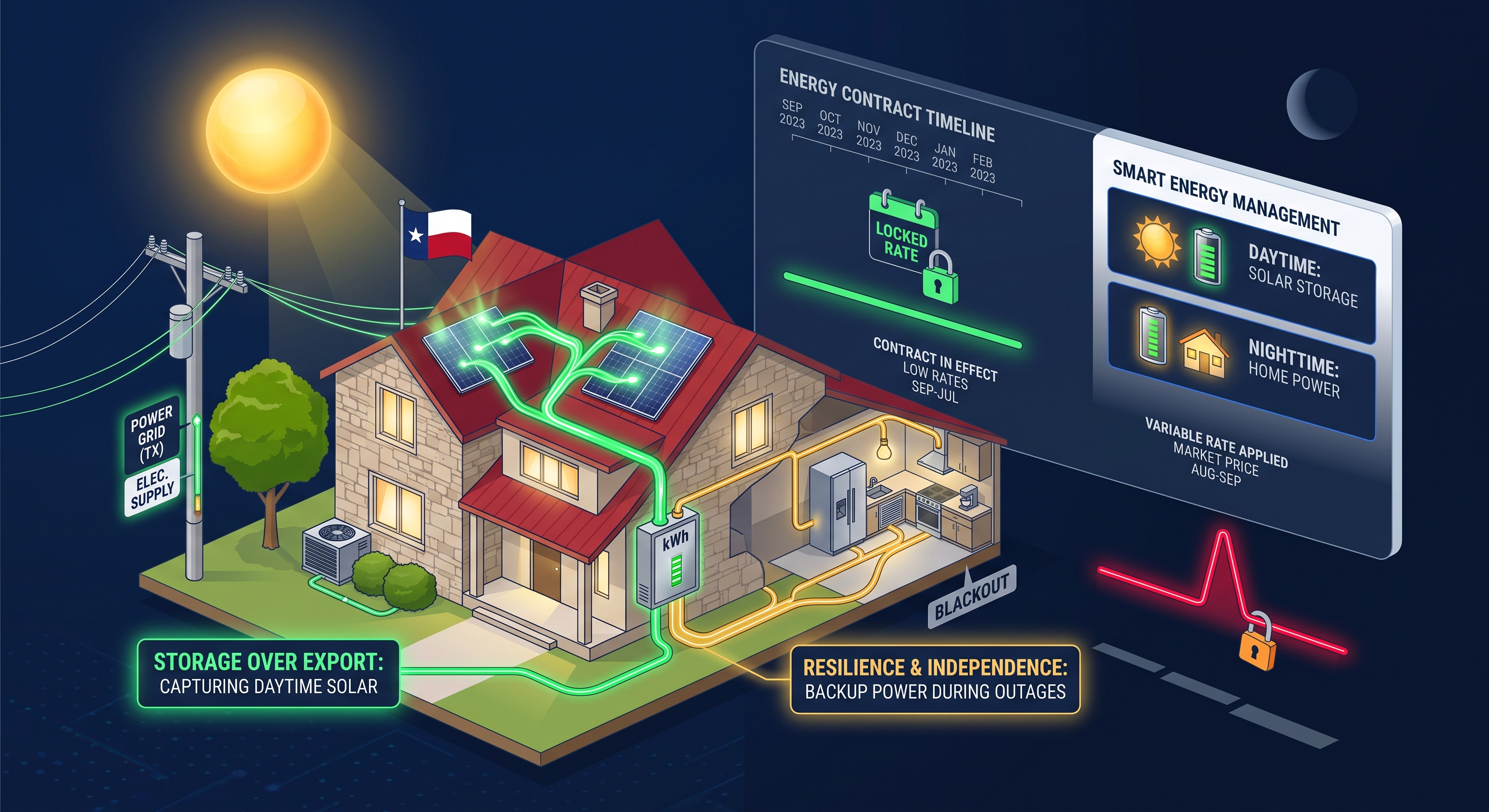
The Battery Factor
If you have a home battery (Tesla Powerwall, Enphase, etc.), the equation changes:
- You can store excess solar production instead of exporting it
- Use stored power at night instead of paying import rates
- This reduces your dependence on a high buyback rate
For a closer look at which plan types reward a home battery, and why the plan often matters more than battery automation, see the best electricity plan for a Powerwall in Texas.
If you are considering a battery or want to compare installers, our Texas Solar and Battery Installer Guide covers ratings, reviews, and portable power alternatives across all four Texas regions.
How to Find the Best Buyback Plan
The challenge is that "best" depends entirely on your specific numbers. An energy monitor can help establish a useful baseline:
- How much do you import vs. export each month?
- What is the seasonal pattern? (Exports peak in spring/fall; imports peak in summer)
- Do you have a battery?
- Which TDU service area are you in?
The WattTrim Approach
WattTrim's audit is built specifically for this problem. Snap a photo of your electricity bill and we:
- Separate your import and export data by month
- Fetch current solar buyback plans for your service area
- Calculate the actual annual cost on each plan using your real usage pattern
- Rank them by total savings vs. your current plan
You can also browse the plan database or compare solar buyback plans across all six TDU service areas to see what is available before running an audit.
Already have solar? Run a full audit to find the best buyback plan for your system.
Thinking about going solar? Try our Solar Study to see if the investment makes financial sense based on your actual electricity usage.
Common Mistakes
- Assuming 1:1 buyback: Do not assume your provider is giving you full value for exports. Check your contract and recent bills.
- Ignoring base fees: A zero-base-fee plan at 11 cents often beats a $15/month plan at 10 cents.
- Not checking annually: Solar buyback rates change. Your export ratio might shift as your household changes. Review your plan at least once a year.
- Overlooking TOU options: Some solar customers do better on time-of-use plans where peak export times align with high-value rate periods.
Your panels are generating value every day. Make sure your plan is capturing all of it.
Put This Knowledge to Work
Compare your current plan against 1,500+ options across all 6 Texas TDU service areas, including exclusive broker-negotiated rates not found on PowerToChoose.org. Always free.
Trim My BillGridWise Audit shows the plans. WattTrim audits your bill to find your savings.
Keep Reading

Frequently Asked Questions
How do solar buyback plans work in Texas?
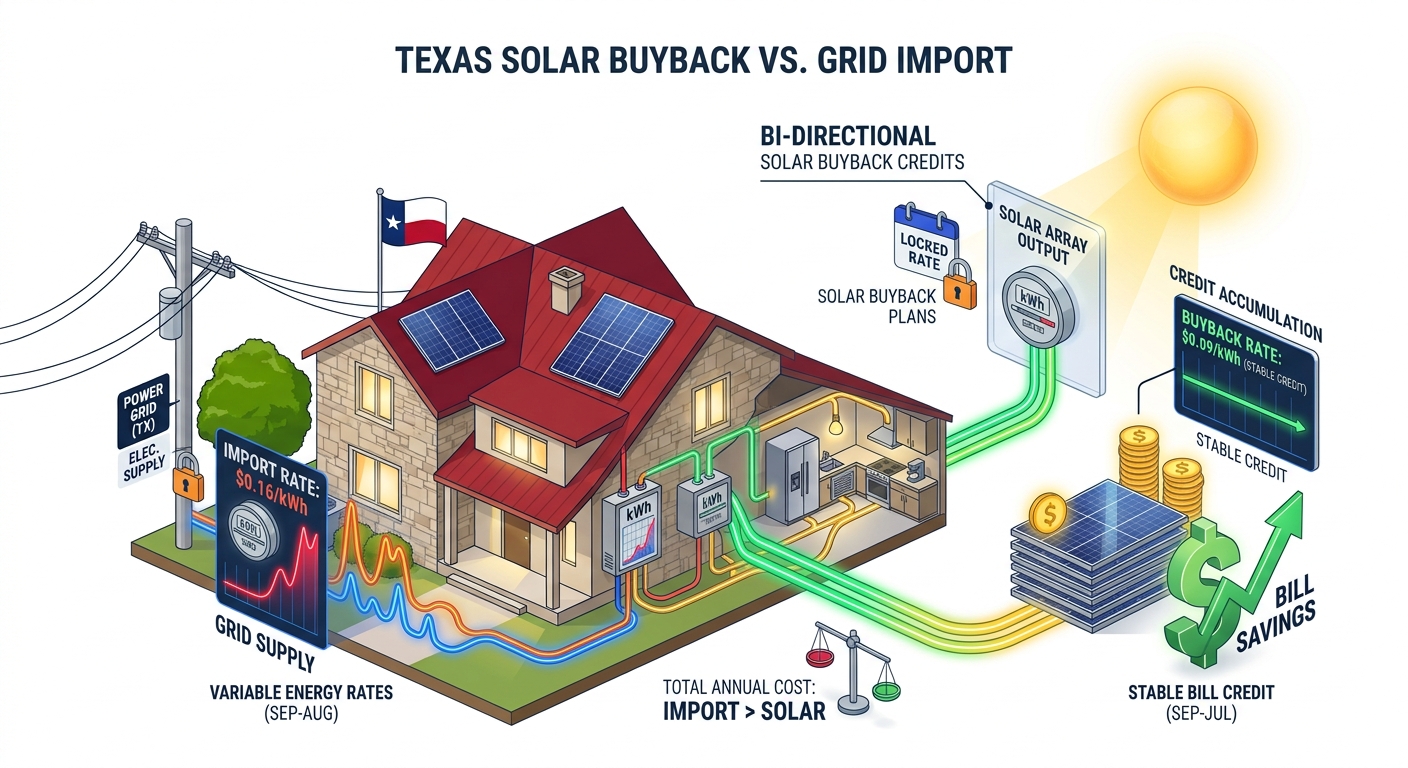
A solar buyback plan credits electricity that your panels export to the grid at terms set by the REP. You still pay the plan's import rate and applicable delivery charges when your home draws power from the grid.
What should I compare in a Texas solar buyback plan?
Compare the import rate, export rate, monthly base fee, contract length, and delivery charges on imported power. The right plan also depends on your seasonal import and export pattern.
Does a home battery change which solar plan is best?
A battery can store excess solar generation for later use, reducing imports and reliance on export credits. It changes the calculation, but the best plan still depends on the home's actual production and consumption pattern.