The Solar Bill Swap: Why Paying the Same Amount Is Still a Smart Move

A solar loan payment that resembles an electric bill can still build ownership of a power-producing asset, while utility payments purchase electricity without creating home equity and generally rise with rates. The bill swap is not universal, so homeowners should account for roof condition, shading, expected time in the home, financing terms, and actual seasonal usage before deciding.
There's a moment in almost every solar consultation where the homeowner squints at the numbers and says, "So I'm paying roughly the same amount per month... why would I bother?"
It's a fair question. If your current electric bill is $180 and your solar loan payment would be $175, the monthly cash flow looks like a wash. Some people walk away at that point, thinking solar "doesn't make sense" for them.
But that thinking has a blind spot - and it's a big one.
Expense vs. Asset: The Core Distinction
Every month you pay your electric bill, that money is gone. You're renting electricity. You don't accumulate anything. Next month, you pay again. The year after that, you pay more - because rates go up.
A solar loan payment, even at the same dollar amount, is fundamentally different. You're purchasing an asset that sits on your roof, generates power for 25-30 years, and adds measurable value to your home.
Same monthly number. Completely different financial category.
Think of it this way:
| Electric Bill | Solar Loan Payment | |
|---|---|---|
| What you're doing | Renting electricity | Buying equipment you own |
| Where the money goes | Utility company's revenue | Your home's equity |
| What you own afterward | Nothing | A power-generating asset |
| What happens when it's paid off | You keep paying forever | Your electricity is nearly free |
| Effect on home value | None | Increases resale value |
The Payoff Moment
A solar loan typically runs 15-25 years depending on the terms. The panels themselves last 25-30 years, sometimes longer. That gap is where the math gets exciting.
Let's say you finance a system with a 20-year loan at $175/month. For those 20 years, your cost is roughly the same as your old electric bill. But in year 21, your loan is paid off - and the panels keep producing.
Your electric bill drops to near zero. You're generating your own power from equipment you fully own.
Meanwhile, your neighbor who stuck with the utility? They're still paying - except now their bill is higher because electricity rates have been climbing 2-4% per year for the past two decades.
Here's what that looks like over 30 years with a $180/month starting bill and 3% annual rate increases:
| Year | Utility Customer Pays (Cumulative) | Solar Owner Pays (Cumulative) |
|---|---|---|
| Year 10 | $24,800 | $21,000 |
| Year 20 | $58,100 | $42,000 |
| Year 25 | $80,600 | $43,200 |
| Year 30 | $108,400 | $44,400 |
Your Home Gets More Valuable
Multiple studies, including research from Zillow and the Lawrence Berkeley National Laboratory, have found that solar panels increase a home's resale value. The commonly cited figure is a 3-4% increase in home value, though it varies by market.
In Texas, where electricity costs are a visible monthly pain point, a home that generates its own power is a tangible selling point. Buyers see it as one less bill to worry about.
Even if you sell before the loan is paid off, the increased home value can offset or exceed the remaining loan balance - especially as the system ages and proves its output over time.
Rate Inflation Is the Silent Variable
Texas electricity rates aren't fixed across time. They fluctuate year to year, and the long-term trend is upward. The average residential rate in Texas has risen roughly 2-4% annually over the past decade, with sharper spikes during high-demand summers.
When you lock in a solar loan, your payment is fixed. Month 1 costs the same as month 180. Meanwhile, the electricity you would have been buying gets more expensive every year.
The "bill swap" that looks even today becomes a bargain five years from now - and a significant advantage ten years out.
This is the part most quick comparisons miss. They compare today's electric bill to today's loan payment as if both numbers stay frozen. They don't. One is locked. The other drifts upward.
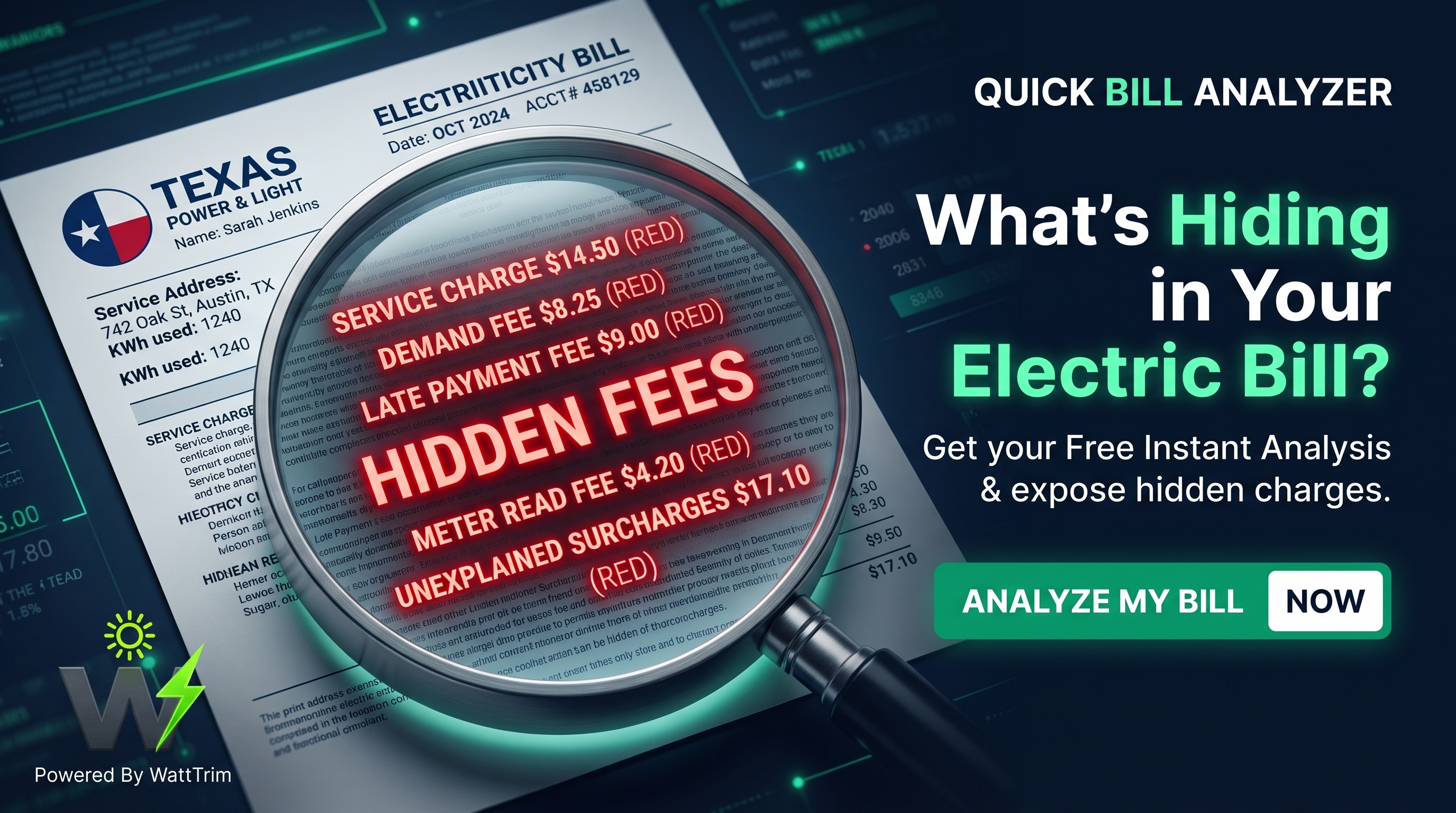
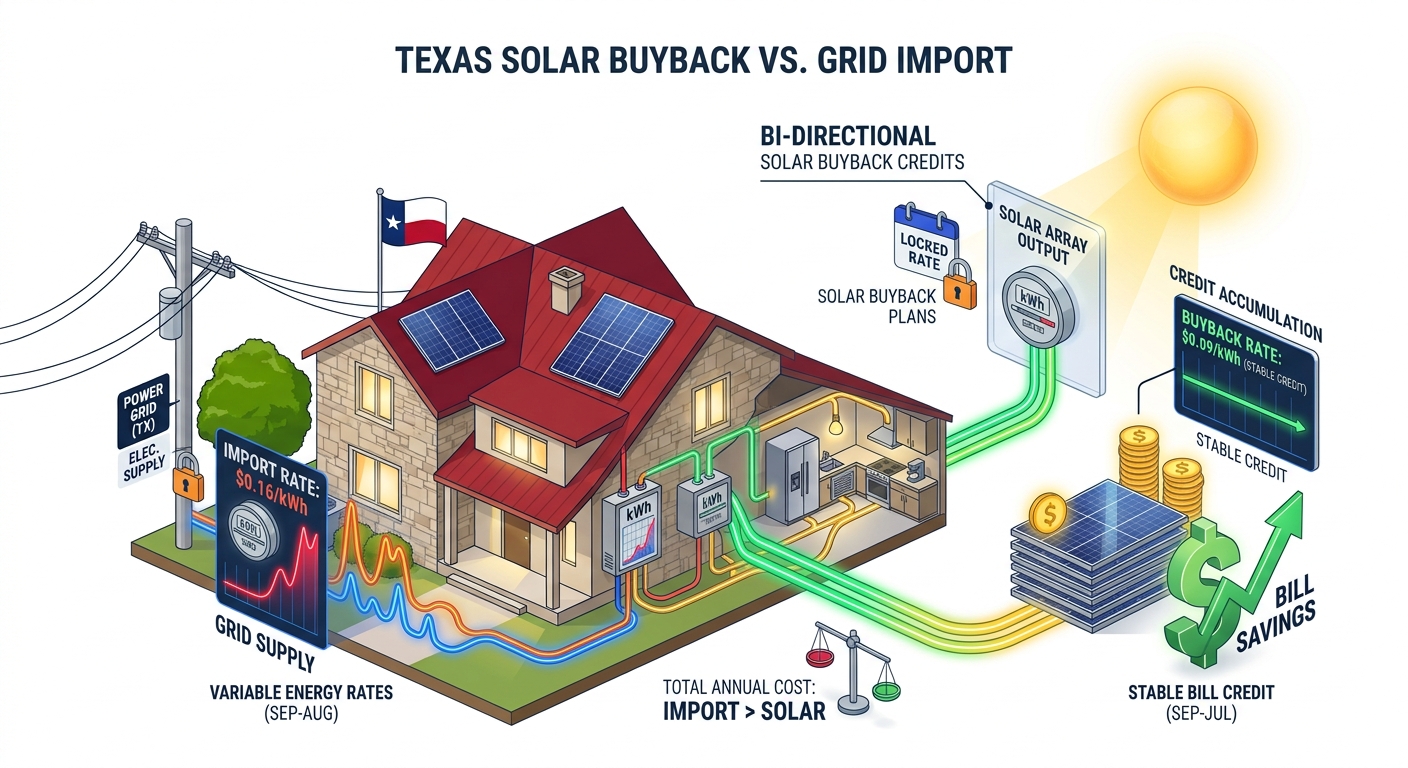
For solar households, the value of exported electricity is another part of the long-term calculation. GridWise displays real-time ERCOT settlement-based wholesale averages so you can see exactly what solar buyback credits are worth in your area. Compare solar buyback plans with transparent wholesale pricing on the Solar Plans page.
Virtual Power Plant Programs: Earning More from Your Battery
If you have a home battery paired with your solar system, Virtual Power Plant (VPP) programs can add another layer of value to the bill swap equation. VPP programs pay you monthly credits - typically $2 to $50 per month depending on the provider and your battery brand - in exchange for allowing the grid to draw on your stored energy during peak demand.
This means your solar-plus-battery setup is not just reducing what you buy from the grid. It is actively earning revenue by selling stored energy back when the grid needs it most. Some programs like Tesla Electric offer up to $400 per year per Powerwall, while others like Reliant and Gexa provide flat $50 monthly credits for compatible systems.
Not every VPP program works with every battery. Compatibility varies by provider: Tesla Electric requires Powerwalls, Chariot works exclusively with Qcells, and others support Enphase or SolarEdge systems. Choosing a plan that matches your hardware is essential to capturing the full credit.
For a complete breakdown of all 13 Texas VPP programs, compatible battery brands, and how credits are calculated, see our Virtual Power Plant guide.
If you are deciding between battery settings and a plan change, see why the plan matters more than automation for Texas Powerwall owners.
What About the Loan Interest?
Fair point. You're paying interest on a solar loan, which means the total cost over the life of the loan exceeds the panel price. But consider:
- You'd be paying the utility company anyway - and getting zero equity for it
- Solar loan interest rates are often competitive (5-7% for strong credit), and the interest may be tax-deductible depending on how the loan is structured
- The panels generate value every single day - unlike a car loan where the asset depreciates, solar panels produce a measurable financial return throughout their life
When the Bill Swap Doesn't Work
To be fair, this isn't a universal win. The bill swap makes less sense if:
- Your roof needs replacement soon - panels should go on a roof with 10+ years of life left
- You plan to move within 2-3 years - the equity benefit needs time to materialize
- Your electricity usage is very low - if your bill is already $60/month, the system size needed may not justify the installation cost
- Heavy tree shading - panels need consistent sun exposure to hit their production estimates
If any of these apply to you but you still want to lower your exposure to rising rates and grid outages, portable power stations offer an alternative worth considering. Units like the EcoFlow DELTA 3 Max Plus or BLUETTI Elite 400 can charge from a wall outlet during cheap off-peak hours and power your critical appliances during expensive evening peaks or outages, no roof, permits, or long-term commitment required. Renters and short-term homeowners can start saving on TOU rate differences today and take the battery with them when they move. See more options in our portable power directory.
As an Amazon Associate, GridWise earns from qualifying purchases.
The Mindset Shift
The biggest barrier to solar adoption isn't the math - it's the framing. When someone hears "your payment will be about the same," they hear "no benefit." But that's like saying buying a house has no benefit over renting because the monthly payment is similar.
The benefit isn't in the monthly number. It's in what that number is doing for you.
- Paying a utility bill: funding someone else's infrastructure
- Paying a solar loan: funding your own
How to Know If the Bill Swap Works for You
The key variables are your current electricity usage, your roof's solar potential, and the loan terms available to you. A few hundred dollars difference in system sizing or a half-point change in interest rate can shift the breakeven timeline significantly.
The best starting point is understanding your actual Smart Meter data and usage patterns - not just your average monthly bill, but how your consumption varies across seasons. That's where real projections come from, not estimates based on square footage or zip code averages.
If you have a battery system, understanding which VPP programs work with your specific hardware can add meaningful monthly credits that improve the bill swap math even further.
If you are ready to explore solar, our Texas solar installer directory compares top-rated companies across all four regions with Google reviews and BBB grades to help you find the right fit.

Put This Knowledge to Work
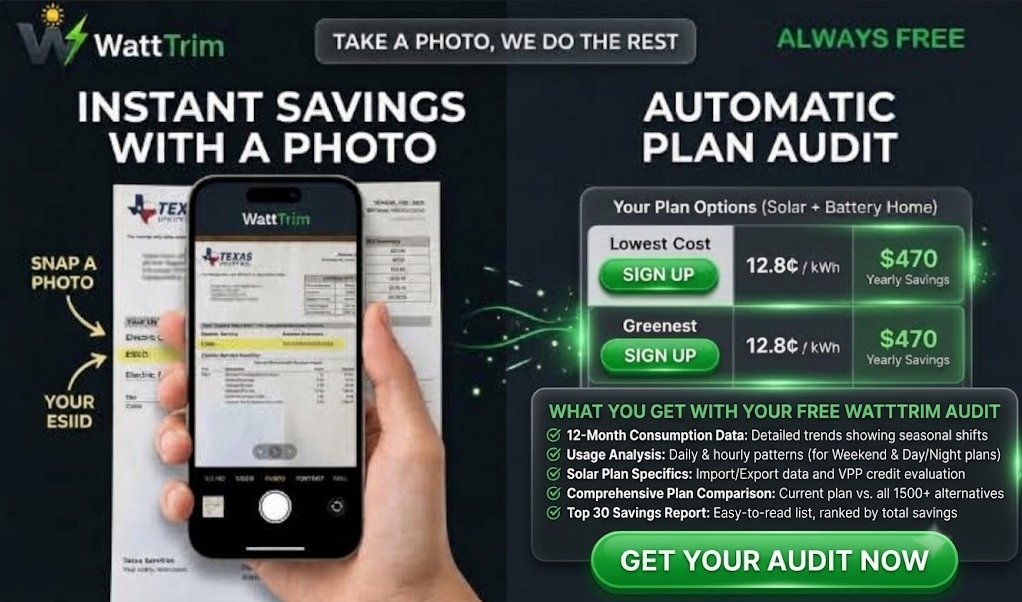
Compare your current plan against 1,500+ options across all 6 Texas TDU service areas, including exclusive broker-negotiated rates not found on PowerToChoose.org. Always free.
Trim My BillGridWise Audit shows the plans. WattTrim audits your bill to find your savings.
Keep Reading
Frequently Asked Questions
Is solar worth it if my loan payment is about the same as my electric bill?
It can be, because a solar payment builds ownership of a power-producing asset while a utility payment does not. The decision still depends on financing, roof condition, shading, expected time in the home, and actual usage.
What happens after a solar loan is paid off?
The panels can continue producing after the loan term ends, reducing the cost of electricity you need to buy. A solar household may still have some grid charges or electricity costs, but the loan payment is no longer part of the bill.
When does a solar bill swap make less sense?
It may be a weaker fit when the roof needs replacement soon, the home will be sold within a few years, usage is very low, or heavy shading limits production. These factors should be evaluated before installation.
Can a home battery improve the bill swap equation?
Yes. If you have a compatible battery, Virtual Power Plant programs can pay monthly credits ranging from $2 to $50 per month in exchange for grid access to your stored energy during peak demand. This adds an earning component on top of the savings from solar generation. See the full VPP program comparison for details.