The Residential Demand Charge: The Next Major Threat to Rooftop Solar Economics
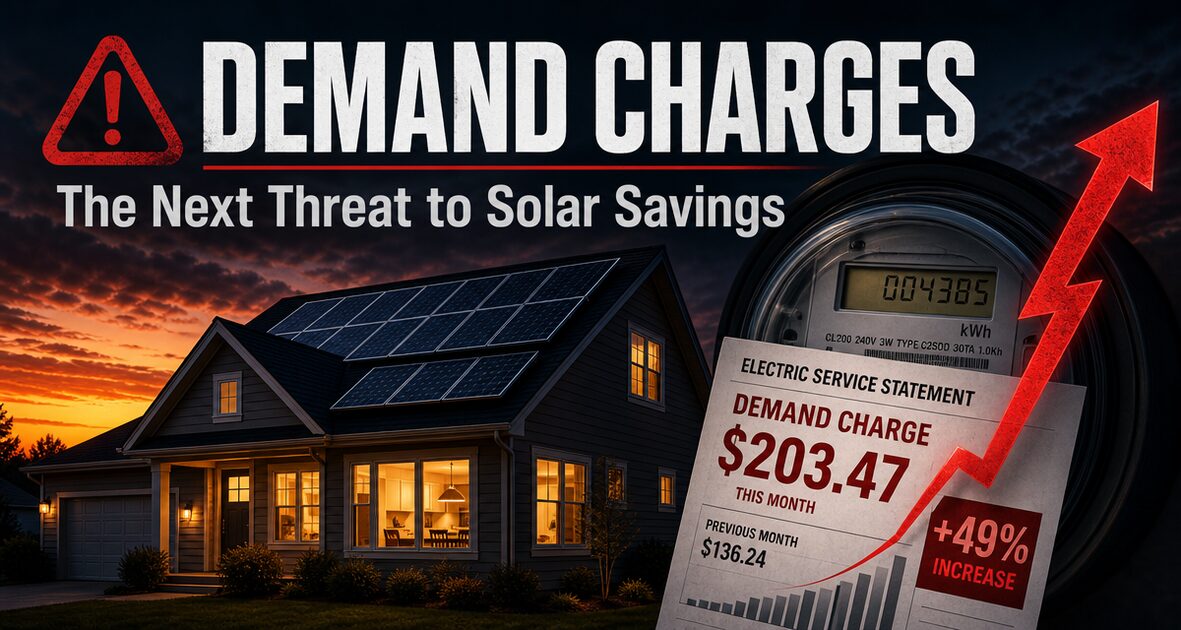
A residential demand charge bills a home for its highest grid draw during a short interval, so one evening spike after solar production falls could outweigh the savings from lower total kWh consumption. Texas residential delivery charges remain primarily volumetric today, but the article recommends pairing solar with batteries and smart load management in case demand-based pricing expands.
If you own a home solar system or are planning to invest in one, you are likely familiar with the standard rules of engagement: you install panels, generate your own clean power, and reduce the total number of kilowatt-hours (kWh) you buy from the grid. For over a decade, that volumetric, pay-for-what-you-consume math has driven the entire residential solar market.
But a quiet regulatory shift happening across the country threatens to completely rewrite that playbook.
Recent court and regulatory battles in states like Nevada have thrust a dangerous new billing mechanism into the residential spotlight: the peak demand charge.
Even if you live in a deregulated market like Texas - where standard residential delivery charges (from TDUs like Oncor or CenterPoint) and retail electric plans are still billed almost entirely on flat volumetric rates - this is a massive red flag issue you need to watch. Here is why the demand charge is a solar deterrent, and how the industry must evolve to survive it.
What Is a Demand Charge? (The 15-Minute Trap)
Traditionally, demand charges have been reserved strictly for commercial and industrial utility customers. While a standard energy bill charges you for the total volume of electricity you use over a month, a demand charge bills you based on the maximum speed at which you pull power from the grid during a single, brief window.
Utilities typically measure this in 15-to-15-minute intervals during designated "peak hours" (usually late afternoon and evening).
The Analogy: Think of a volumetric rate like the odometer on your car - you pay for the total miles driven. A demand charge is like a speed camera - you get fined based on the single fastest speed you hit during the entire trip, even if you only drove that fast for 30 seconds.
Why Demand Charges Are a "Single-Spike" Penalty for Solar
For a standard homeowner without solar, a demand charge is confusing and difficult to manage. For a rooftop solar owner, it can be financially devastating.
Solar arrays produce their maximum power during the middle of the day when the sun is highest. However, utilities typically set their "peak demand windows" between 4:00 PM and 9:00 PM - exactly when the sun is setting, solar production is dropping to zero, and families are returning home to turn on heavy appliances.
If your solar production drops off at 5:30 PM and your air conditioning, clothes dryer, stove, and electric vehicle (EV) charger all ramp up at the exact same time, you will create a massive, short-term spike in power drawn from the grid.
Under a peak demand rate structure, that single 15-minute spike sets your demand fee for the entire monthly billing cycle, instantly wiping out a massive chunk of the savings your solar panels generated during the day.
The Evening Spike in Action
| Time of Day | Solar Production | Grid Draw | What Happens |
|---|---|---|---|
| Mid-Day (11 AM - 3 PM) | High | Near Zero | Panels cover your load, excess exports to grid |
| 5:30 PM | Dropping Fast | Sudden Spike | AC + dryer + stove + EV charger all hit at once |
| Billing Impact | - | - | That single 15-min spike sets your demand fee for the entire month |

The Utility Argument vs. The Consumer Reality
Monopolistic utilities push for these changes under the guise of fairness. They claim that because solar customers buy fewer total kWh, they aren't paying their "fair share" to maintain the physical poles and wires - creating a "cost shift" to non-solar consumers. They argue the grid must be engineered to handle a home's absolute peak draw, so customers should pay for that capacity.
Solar advocates and consumer protection groups see it differently: it is a highly punitive rate design specifically engineered to protect utility business models and erode the financial return on investment (ROI) of residential clean energy.
The distinction matters. Volumetric rates reward conservation and self-generation. Demand charges punish brief, unavoidable spikes that have little to do with a homeowner's overall consumption habits.
Where This Is Already Happening
While residential demand charges haven't reached most markets yet, the regulatory groundwork is being laid:
- Nevada - Court battles have upheld utility proposals to restructure residential solar billing around demand-based components
- Arizona - APS and SRP have experimented with demand-based rate structures for solar customers
- Alabama - TVA-area utilities have explored demand charges for distributed generation customers
What About Texas?
Texas currently remains insulated from widespread residential demand charges thanks to its unique market structure:
- Deregulated retail competition means dozens of providers compete for your business on transparent, volumetric terms
- PUCT oversight provides regulatory guardrails against punitive rate designs
- TDU delivery charges (from Oncor, CenterPoint, AEP, and TNMP) are still billed on flat per-kWh rates
The Ultimate Takeaway: The Era of "Solar-Only" Is Ending
The shifting regulatory landscape across the nation sends a clear message to all solar advocates and homeowners: the era of relying solely on solar panels is drawing to a close.
To future-proof your home against aggressive utility rate structures, the strategy must pivot from simple energy generation to active energy management.
1. Pair Generation with Storage
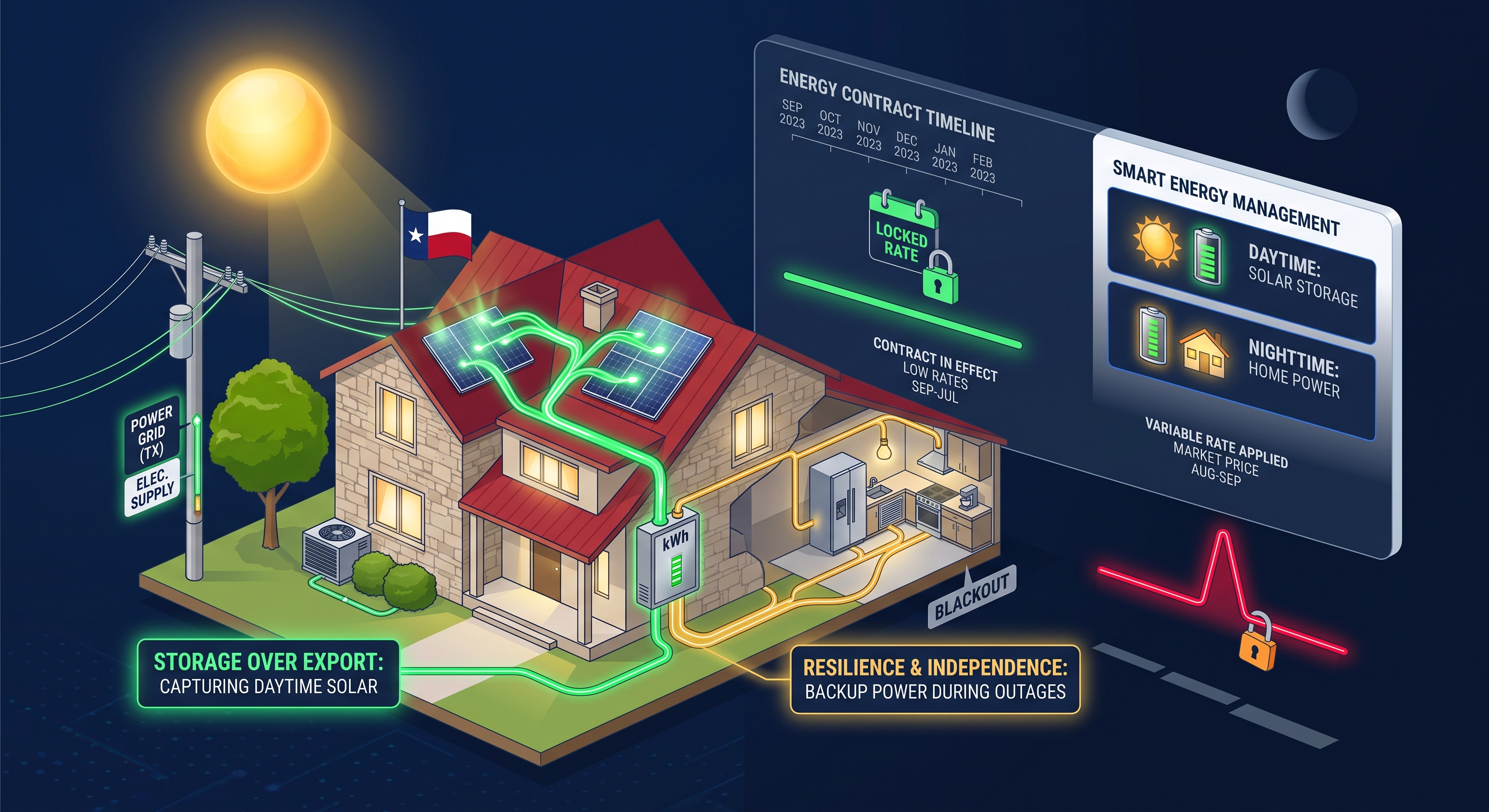
Rooftop solar without a home battery leaves you completely exposed to evening utility peaks. Integrating physical battery storage allows you to save your daytime solar energy and strategically discharge it during peak windows, ensuring your draw from the grid remains flat.
A battery doesn't just store energy - under a demand charge regime, it becomes your financial shield against single-spike penalties.
2. Embrace Smart Load Management
Home automation and smart electrical panels are no longer luxury add-ons; they are defensive necessities. Using a smart power strip and programmatically ensuring that heavy-draw appliances (like HVAC systems and EV chargers) never run simultaneously during peak hours prevents the single-interval spikes that trigger high fees.
3. Stay Informed and Engaged
The regulatory environment is changing. As utilities find new ways to alter the financial math of clean energy, homeowners must stay ahead of the curve by building self-reliant, intelligent home energy ecosystems that can adapt to whatever rate design comes next.
Put This Knowledge to Work
Compare your current plan against 1,500+ options across all 6 Texas TDU service areas, including exclusive broker-negotiated rates not found on PowerToChoose.org. Always free.
Trim My BillGridWise Audit shows the plans. WattTrim audits your bill to find your savings.
Keep Reading

Frequently Asked Questions
What is a residential demand charge?
A demand charge bills a household based on its highest grid draw during a short measurement interval, often 15 minutes. It differs from a volumetric charge, which is based on the total kWh used over the month.
Why could demand charges be hard on solar households?
Solar production often declines just as evening household demand rises. One brief period when the AC, dryer, stove, and EV charger run together could set a monthly demand fee despite low total grid use.
Do Texas homes currently pay residential demand charges?
Texas residential delivery charges are primarily volumetric today. The article discusses demand charges as a rate-design risk to monitor, not as a standard statewide residential charge.
The best defense against changing rate structures starts with understanding what you're paying today. Compare current Texas electricity plans to see how your rate stacks up - or use WattTrim to analyze your actual Smart Meter data and find the best plan for your usage pattern.
WattTrim's plan rankings are based solely on your actual usage data. Provider compensation never influences your results.