Demystifying the Texas Electricity Facts Label (EFL): A Step-by-Step Guide
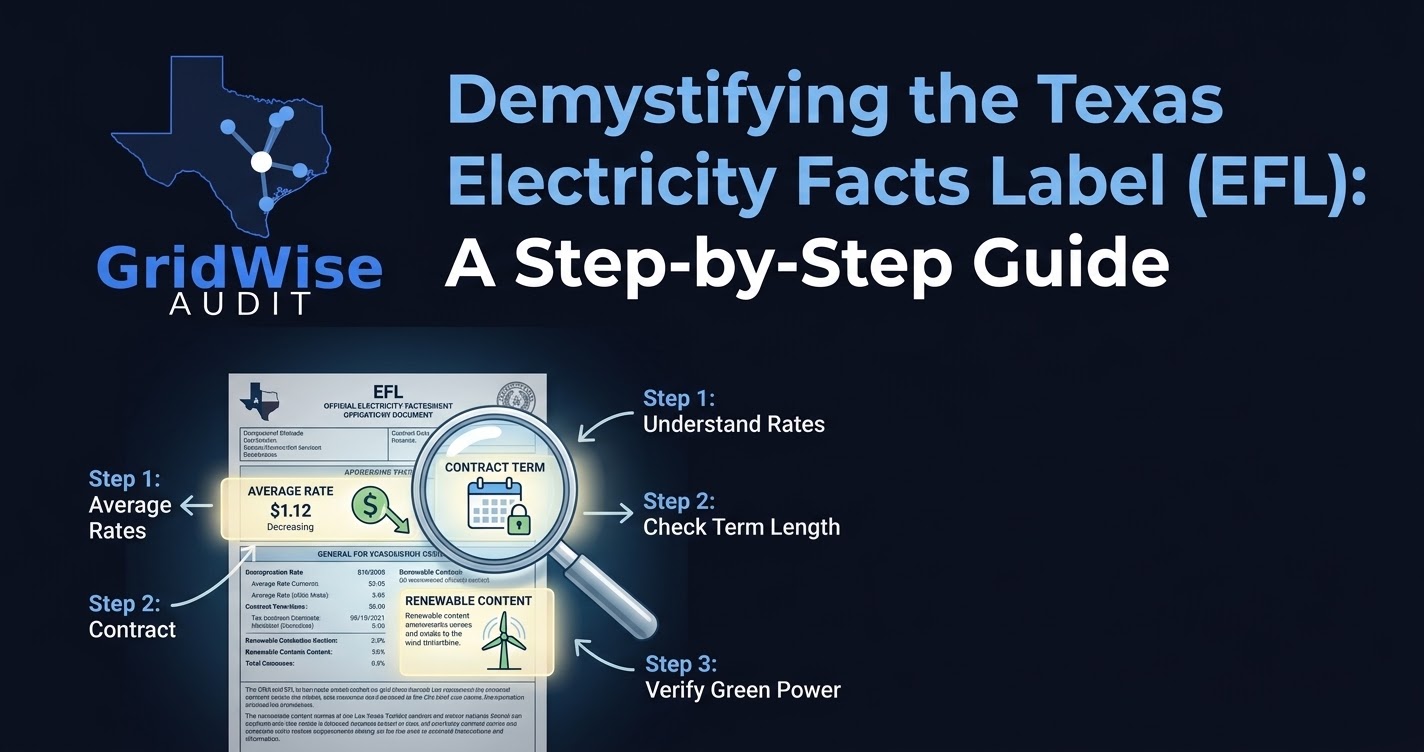
The Texas Electricity Facts Label shows calculated average prices at 500, 1,000, and 2,000 kWh, but those benchmarks may not match a household's actual cost when credits or thresholds create sharp pricing changes. Before enrolling, review the energy charge, TDU pass-through fees, base charges, product type, contract term, and cancellation fee, then compare the EFL with real historical usage.
Shopping for a new electricity plan in Texas's deregulated energy market can feel like navigating a legal minefield. With hundreds of competitive retail offers available, making an accurate "apples-to-apples" comparison is notoriously difficult.
To level the playing field, the Public Utility Commission of Texas (PUCT) mandates that every Retail Electric Provider (REP) must publish a standardized disclosure document for every plan they offer: the Electricity Facts Label (EFL).
Think of the EFL as a "Nutrition Facts" label for your energy bill. Just as a food label breaks down macronutrients, the EFL peels back the marketing fluff to reveal the true mathematical cost of your power contract. Here is exactly how to read an EFL to protect yourself from hidden structural gimmicks.
1. The Core Baseline: The Electricity Price Chart
At the top of every EFL sits the primary pricing disclosure grid. By law, providers must display their calculated average price per kilowatt-hour (kWh) across three specific standardized monthly usage milestones:
- 500 kWh: Typical for a small apartment or highly efficient condo.
- 1,000 kWh: Standard for a small-to-medium single-family home.
- 2,000 kWh: Representative of large homes or properties with high cooling demands during peak Texas summers.
The Footnote Trap
The most critical mistake Texas consumers make is assuming they will pay exactly the headline rate listed in one of these three columns. You will not.
The numbers displayed here are calculated averages that blend multiple independent charges together. If your actual consumption falls even a single kilowatt-hour outside of these exact benchmarks, your real "all-in" rate could skyrocket.

2. Breaking Down the Bill Components
An EFL is divided into distinct operational buckets that detail where every cent of your money is actually going:
A. The Energy Charge
This is the baseline wholesale and operational price per kWh charged directly by your Retail Electric Provider for the raw electricity you consume. For stable, fixed-rate plans, this specific component remains completely locked for the entirety of your contract term.
B. TDU Pass-Through Delivery Charges
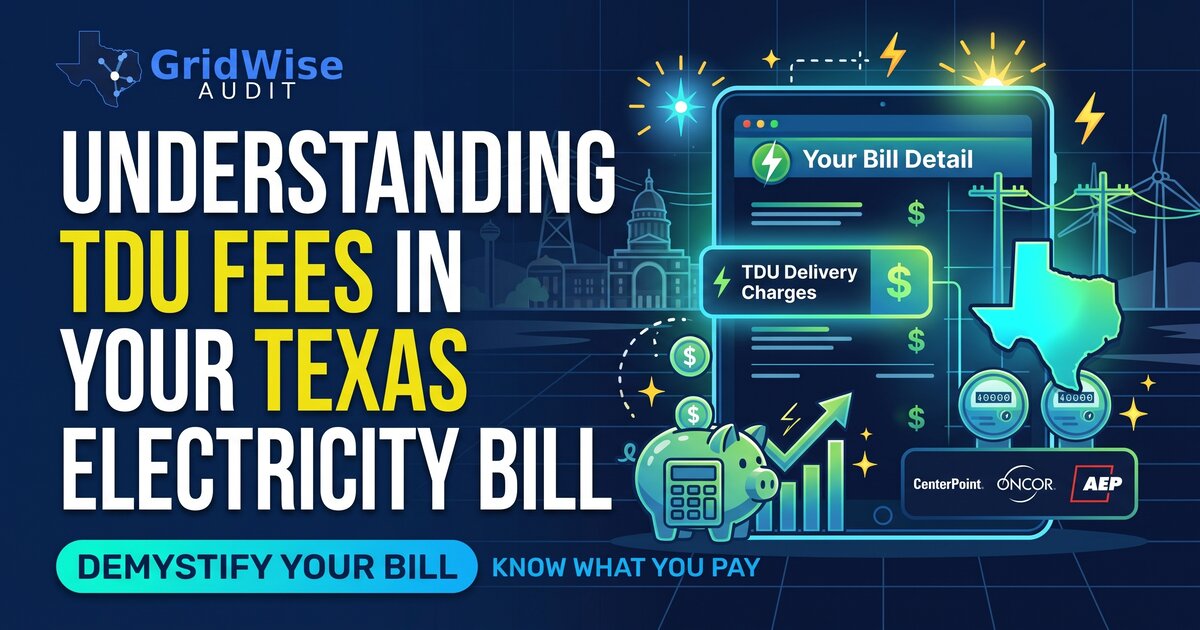
Transmission and Distribution Utility (TDU or TDSP) fees are completely unavoidable and are passed through directly from the regional utility company that maintains the physical grid infrastructure (such as Oncor in Dallas or CenterPoint in Houston).
TDU charges are regulated directly by the PUCT and update automatically twice a year (on March 1st and September 1st). These fees consist of:
- A flat, fixed monthly subscription/base fee (typically between $3.00 and $8.00).
- A variable volumetric fee (typically between 4.5 cents and 7.5 cents per kWh delivered).
C. Base Charges and "Good Bundle" Gimmicks
Many providers implement a flat monthly "Base Charge" (e.g., $9.95 per month) that applies regardless of how much energy you consume. More deceptively, some plans hide minimum usage fees or variable tier metrics in the footnotes. For example, a plan might offer a low rate but penalize you with a hefty structural fee if your monthly usage dips below 1,000 kWh.
3. Disclosures and Hidden Surcharges
The bottom half of the EFL contains the contractual "fine print" disclosures required under PUC Substantive Rules. Always verify these three line items before signing:
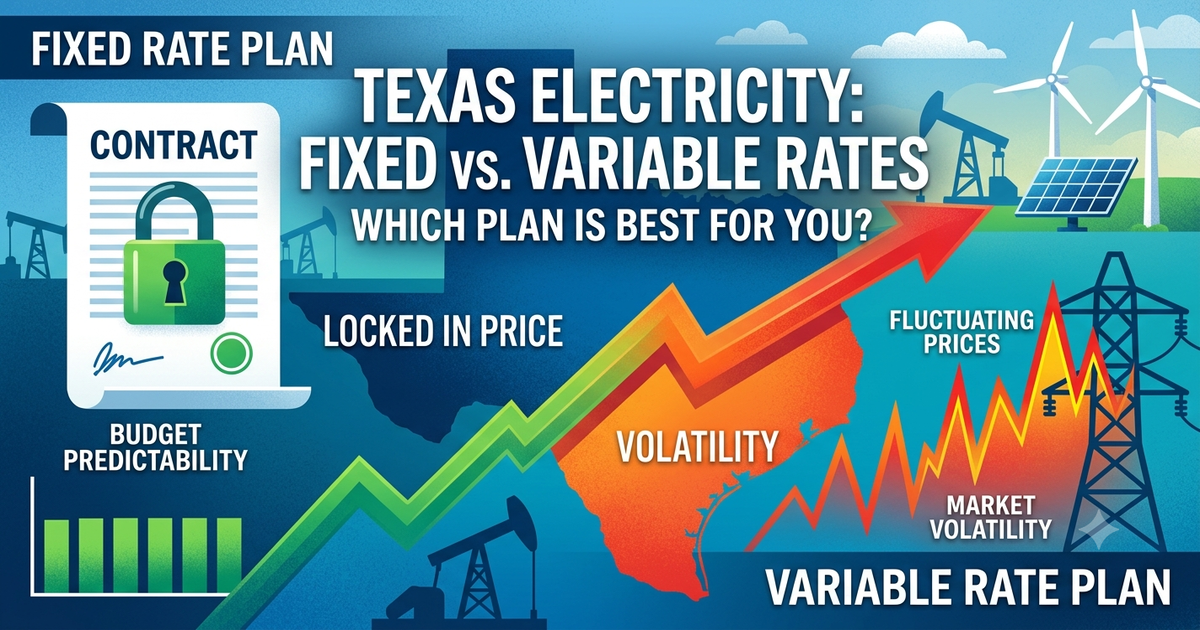
- Type of Product: Ensure it states Fixed Rate if you want protection against summer market volatility. Variable-rate plans fluctuate dynamically month-to-month based on ERCOT grid conditions.
- Contract Term: The formal length of your commitment (typically spanning 12, 24, or 36 months).
- Early Termination Fee (ETF): The structural exit penalty levied if you break your agreement early. This can range from a flat fee ($150 to $300) to a variable penalty (e.g., $20 for every month remaining on the contract). Note that under Texas law, if you provide valid proof of a residential move, exit penalties are legally waived.
Summary Checklist for Texas Smart Shoppers
Before hitting enroll on an electricity comparison portal or in a plan database, always download the official PDF version of the EFL. Do not rely exclusively on the provider's advertised headline rate. Analyze the foundational mathematical components, understand your home's historic usage patterns, and choose a plan structured around how you actually consume energy.
Put This Knowledge to Work
Compare your current plan against 1,500+ options across all 6 Texas TDU service areas, including exclusive broker-negotiated rates not found on PowerToChoose.org. Always free.
Trim My BillGridWise Audit shows the plans. WattTrim audits your bill to find your savings.
Keep Reading
Frequently Asked Questions
What is an Electricity Facts Label in Texas?
An Electricity Facts Label, or EFL, is the standardized plan disclosure required for Texas retail electricity plans. It lists average prices at standard usage levels and the plan's charges, contract details, and important terms.
Why might my EFL rate differ from my actual electricity rate?
EFL prices are calculated at 500, 1,000, and 2,000 kWh, which may not match your monthly usage. Bill credits, thresholds, base fees, and delivery charges can create a very different all-in cost outside those benchmarks.
What should I check before enrolling in a Texas electricity plan?
Review the energy charge, TDU delivery fees, base charges, product type, contract term, and early termination fee. Then compare the plan against your historical usage rather than relying on one headline rate.