How Texas Electricity Deregulation Works: A Consumer's Guide
Texas deregulation separates electricity generation, transmission and distribution utilities, and retail electric providers, so customers choose a REP while their local TDU remains responsible for the wires, meter, and regulated delivery charges. Because REPs can structure plans with tiers, bill credits, and usage thresholds, the article recommends comparing actual historical usage rather than choosing by a headline rate.
If you live in a deregulated region of Texas, you have the unique power to choose your own retail electricity company. While choice is a fantastic asset, the underlying structure of the Texas market can be deeply confusing. To understand how the system works - and how to avoid overpaying - you need to look closely at the three completely separate entities that bring power to your home.
The Three Pillars of Texas Power
The Texas energy market is intentionally broken into three distinct segments:
1. Power Generators
These are the industrial companies that physically produce electricity. They operate nuclear plants, natural gas facilities, massive wind farms, and utility-scale solar arrays across the state. They sell their raw electrical output wholesale into the ERCOT (Electric Reliability Council of Texas) grid marketplace.
2. Transmission and Distribution Utilities (TDUs)
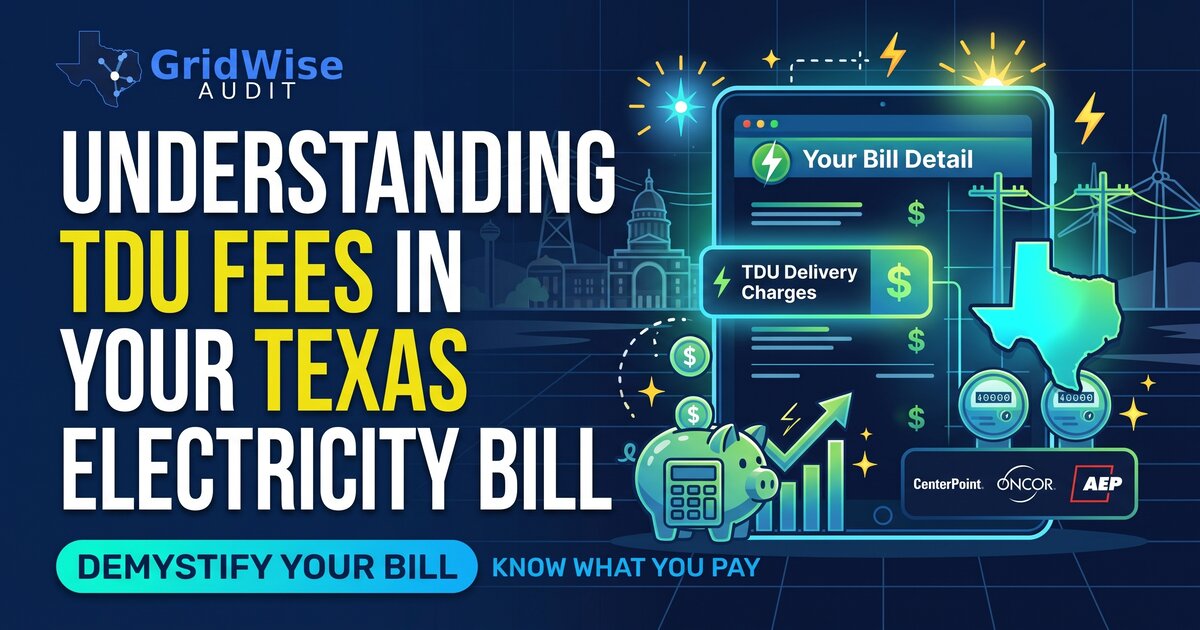
Your regional TDU is the physical utility provider that owns and maintains the actual wires, poles, transformers, and digital smart meters in your neighborhood. No matter which retail company you choose to buy your power from, your physical utility provider stays exactly the same based entirely on where you live (such as Oncor or CenterPoint). They handle emergency repairs and charge mandatory, regulated TDU fees that appear on your monthly statement.
3. Retail Electric Providers (REPs)
REPs are the commercial brands you shop for online (such as Reliant, TXU, or Gexa). They do not own the power lines, and they do not generate physical electricity. Instead, REPs buy blocks of wholesale energy from generators, bundle them with TDU delivery charges, and market them directly to residential homes. REPs act entirely as billing, marketing, and customer service operations.

Why Is Shopping So Complicated?
Because REPs operate in a highly competitive market, they compete aggressively to win your business. Unfortunately, this competition frequently leads to deceptive pricing models. Instead of offering straightforward, flat rates, many providers engineer complex "tiered plans" or minimum usage traps designed to make their plans look cheap at exactly 1,000 kWh or 2,000 kWh, while penalizing you if your actual monthly usage falls short or goes over.
To protect your budget, you cannot simply look at a company's advertised headline rate. You must understand how your home consumes power month-over-month and accurately evaluate plans across all usage variations.
The best defense is data. When you compare plans using your actual historical usage - not guesses or averages - you eliminate the guesswork and see exactly what each plan will cost you. Tools like WattTrimAudit.com analyze your Smart Meter data against every available plan to find the one that truly fits your consumption profile.
Put This Knowledge to Work
Compare your current plan against 1,500+ options across all 6 Texas TDU service areas, including exclusive broker-negotiated rates not found on PowerToChoose.org. Always free.
Trim My BillGridWise Audit shows the plans. WattTrim audits your bill to find your savings.
Keep Reading

Frequently Asked Questions
What does electricity deregulation mean in Texas?
Deregulation allows eligible customers in participating areas to choose a retail electric provider and plan. The local transmission and distribution utility still delivers power and maintains the wires.
Which parts of Texas are deregulated?
Most customers in the ERCOT service area can choose a retail provider, but some municipal and cooperative areas remain regulated or have different rules. Your address determines which options are available.
Can I switch electricity providers at any time?
You can usually switch when your contract ends, and Texas rules provide a fee-free switching window before expiration. An early termination fee may apply at other times unless an exception, such as moving, applies.