Fixed vs. Variable Rate Electricity Plans in Texas: Which Is Best?
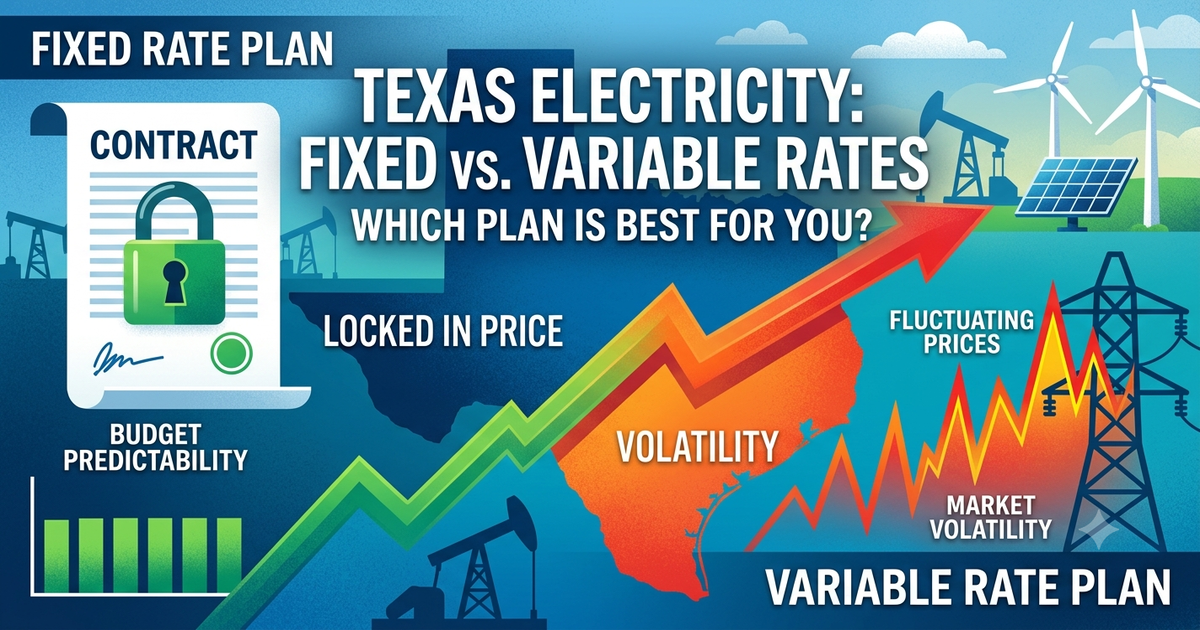
Fixed-rate plans lock in your energy price per kWh for the full contract term, protecting you from wholesale market spikes but requiring a cancellation fee if you leave early. Variable-rate plans adjust monthly based on market conditions with no long-term commitment, but your rate can jump significantly during peak summer demand.
When shopping for an electricity contract on a Texas comparison platform or in a plan database, the very first choice you must make is selecting between a Fixed-Rate Plan and a Variable-Rate Plan. Making the wrong choice here can expose your household budget to extreme financial volatility, especially during severe weather seasons. Here is an honest, mathematical breakdown of how these structures differ and which one you should choose.
1. Fixed-Rate Plans: Maximum Budget Stability
A fixed-rate plan locks in your energy charge per kilowatt-hour (kWh) for the entire duration of your contract term (typically spanning 12, 24, or 36 months).
The Pros
- Total Price Protection: No matter how high demand spikes on the ERCOT grid during a blistering August heatwave, your contractual energy rate cannot change.
- Predictable Budgeting: Your bill will scale strictly with your volume of consumption, with zero surprise rate hikes.
The Cons
- Early Termination Penalties: If market rates drop and you want to switch providers before your contract finishes, you will be hit with an early cancellation fee (typically a flat $150-$300 or a rolling fee per month remaining).
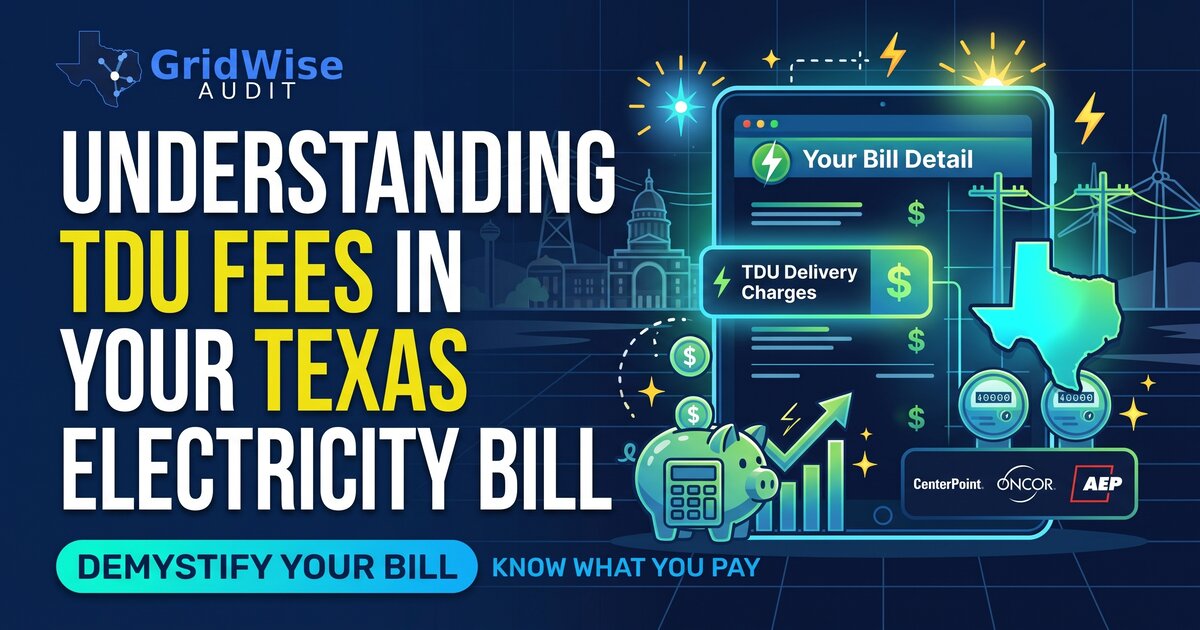
- TDU Variability: While your retail energy rate is legally frozen, your total bill can still fluctuate slightly if state regulators approve bi-annual pass-through adjustments to your local TDU delivery fees.

2. Variable-Rate Plans: The Open-Market Gamble
Variable-rate plans feature an energy price that can change month-to-month, completely at the retail provider's discretion. These plans operate without a long-term contract or cancellation fees.
The Pros
- Ultimate Flexibility: You can cancel or switch to a completely different provider at any moment without penalty.
- No Long-Term Commitments: Ideal for short-term renters or transition periods between homes.
The Cons
- Extreme Price Exposure: When wholesale electricity prices spike due to generation shortages or freezing temperatures, variable rates can instantly surge to astronomical levels.
- Lack of Regulation: In Texas, there is no state-mandated cap on how high a retail provider can raise a variable rate inside a single billing cycle.
The Strategic Verdict
For the vast majority of Texas households, a fixed-rate plan is the only logical choice. Variable plans leave you entirely unprotected against the inherent pricing volatility of the Texas grid.
However, even on a fixed plan, you must look out for predatory tier gimmicks. If you suspect your current fixed plan is costing you more than it should, do not guess. Bring your digital bill over to WattTrimAudit.com to verify if breaking your current contract and switching to a cleaner structure will yield true net savings.
Put This Knowledge to Work
Compare your current plan against 1,500+ options across all 6 Texas TDU service areas, including exclusive broker-negotiated rates not found on PowerToChoose.org. Always free.
Trim My BillGridWise Audit shows the plans. WattTrim audits your bill to find your savings.

Keep Reading

Frequently Asked Questions
What is the difference between fixed and variable electricity plans in Texas?
A fixed-rate plan locks its retail energy charge for the contract term, while a variable-rate plan can change its energy price month to month. Fixed plans usually have an early termination fee, whereas variable plans generally do not require a long commitment.
Can my total bill change on a fixed-rate electricity plan?
Yes. Your bill changes when your usage changes, and TDU delivery charges can be adjusted through regulated pass-through updates. The fixed portion is the retail energy charge, not necessarily every component of the all-in bill.
Are variable-rate electricity plans risky in Texas?
They can be risky because the rate can rise during high-demand periods or severe weather. Their flexibility may suit a short-term situation, but households should understand the lack of long-term price protection.