ERCOT Says Rates Are Falling. The Plans You Can Buy Tell a Different Story.
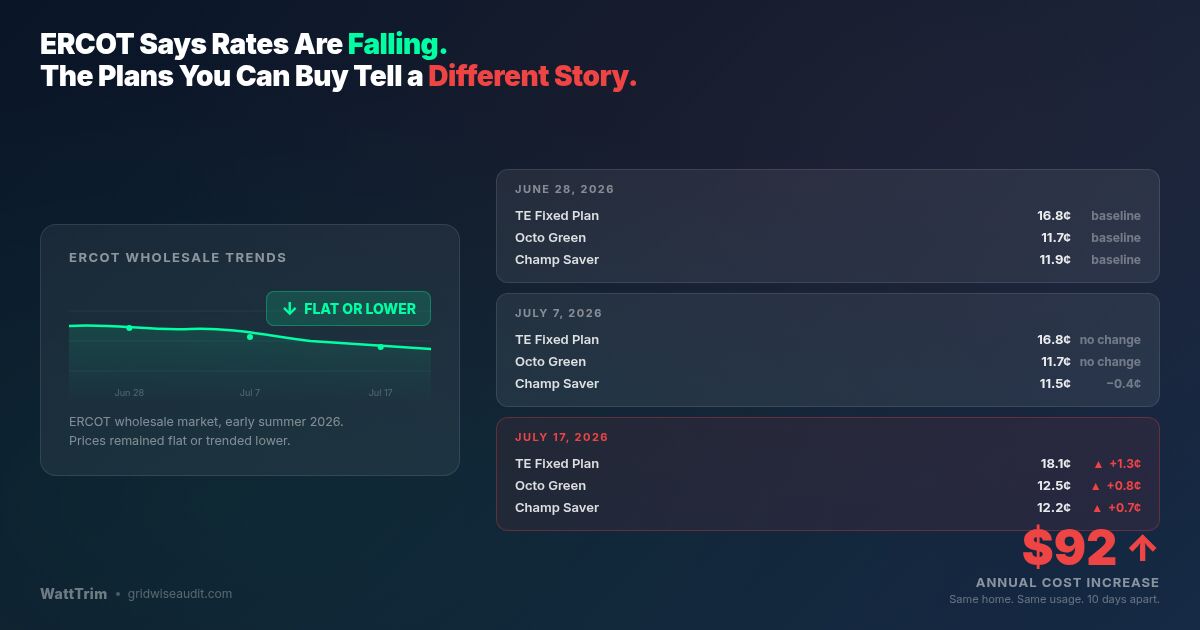
ERCOT market averages can fall while the retail plans available to a particular Texas household become more expensive because providers price in summer risk, solar buyback margins, and changing demand. The article's three audits of one Oncor-area home found the best available annual cost rose from $378 to $470 in ten days, so shoppers should compare current plan offers against their own usage instead of relying on headlines.
Every summer, the Texas electricity market puts on a familiar show. Wholesale prices dip in early summer, headlines declare relief for consumers, and comparison sites promise cheap plans. But something different is happening in 2026: the plans you can actually sign up for are getting more expensive, even as the market data says otherwise.
We used WattTrim's auditing engine to run three identical audits on the same Oncor-area home over a four-week stretch. Same address, same usage history, same solar-plus-battery setup. The only thing that changed was the date. The results tell a story the averages are hiding.
Three Snapshots, One Address, Rising Rates
WattTrim pulled plan pricing from every major provider serving this zip code on three dates: June 28, July 7, and July 17, 2026. Here is what happened to some of the most popular plans during that window.
| Plan | Provider | June 28 | July 7 | July 17 | Change |
|---|---|---|---|---|---|
| TE Fixed Plan | Tesla | 16.8c | 16.8c | 18.1c | +1.3c |
| Octo Green | Octopus | 11.7c | 11.7c | 12.5c | +0.8c |
| Champ Saver | Champion | 11.9c | 11.5c | 12.2c | +0.7c |
| Smart Battery | David Energy | 13.7c | 13.6c | 14.9c | +1.3c |
| Glow Solar | Atlantex | 10.3c | 10.2c | 11.2c | +1.0c |
| Shine | Chariot | 12.8c | 12.8c | 14.1c | +1.3c |
| TE Drive Plan | Tesla | 14.1c | 14.1c | 15.4c | +1.3c |
| Saver +Battery | Meter | 14.6c | 14.4c | 15.3c | +0.9c |
For this household, the estimated annual cost of the best available plan rose from $378 on July 7 to $470 on July 17. That is a $92 increase in ten days, on the same home with the same usage.
Meanwhile, the Market Says "Prices Are Down"
During the same period, ERCOT's reported market rates for the region were flat or trending slightly lower. The overall averages that comparison sites and news outlets cite were painting a picture of stability. No urgency, no reason to worry.
GridWise displays real-time ERCOT settlement-based wholesale averages so you can see exactly what solar buyback credits are worth in your area. Compare solar buyback plans with transparent wholesale pricing on the Solar Plans page.
But those averages blend together thousands of plans across hundreds of providers. They include expiring legacy contracts, promotional introductory rates, and plans that are technically available but impractical for most households. The average is real. It is also misleading.
What matters to a homeowner shopping today is not the market average. It is the price on the plan they are about to sign. And those prices are climbing.
Why the Disconnect?
Three dynamics are pushing retail plan rates higher even while the wholesale market stays relatively calm.
Summer Premium Hedging
Providers do not price plans based on today's wholesale cost. They price based on where they think the market could go during the contract term. In Texas, that means accounting for late July and August heatwaves, when ERCOT grid demand spikes and wholesale prices can surge past $5,000 per megawatt-hour in a matter of minutes.
Even if today's spot price is low, providers are building a risk premium into every new fixed-rate contract they offer right now. The closer we get to peak summer, the larger that premium grows.
Solar Buyback Margin Compression
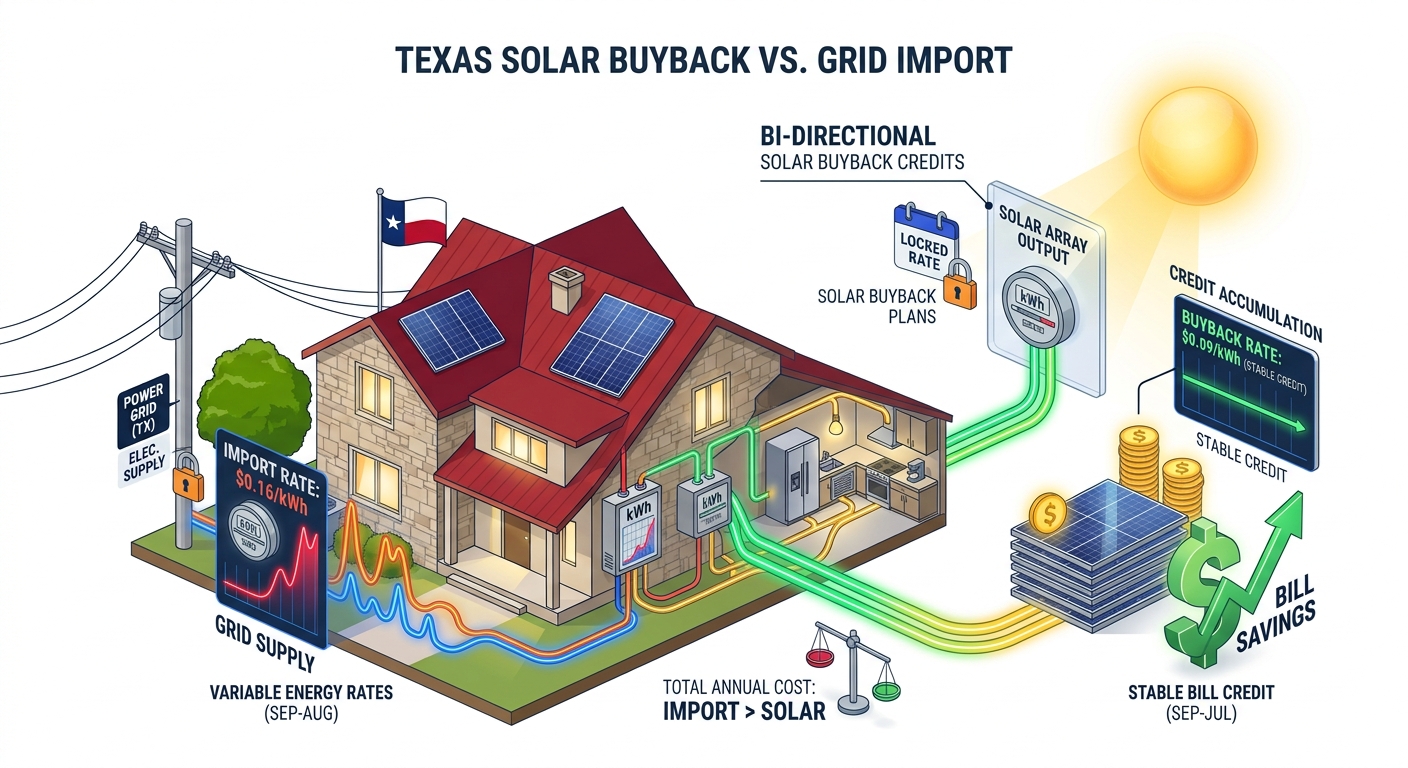
For solar homeowners, there is an additional factor. As more residential solar systems feed power back to the grid during daylight hours, the value of that exported energy is declining. Providers are responding by increasing import rates to protect their margins on solar buyback plans.
This shows up clearly in the data. Plans like Chariot Shine and David Energy Smart Battery, both popular with solar customers, saw some of the sharpest increases over the four-week window.
The Pricing Cycle That Rewards Inaction
Providers understand that most customers check rates once, maybe twice, and then stop looking. The pricing models reflect this. Early-summer plans are often priced more aggressively to capture customers who are shopping after their winter contract expires. By mid-July, with the hottest months ahead, providers have less incentive to compete on price. Demand for new contracts drops, and the customers still shopping are more likely to accept whatever is available.
This creates a cycle: the customers who wait end up paying more, and the customers who locked in earlier got a better deal without realizing it was temporary.

What This Means for Texas Homeowners
The takeaway is not that you should panic and sign up for the first plan you see. It is that the electricity market in Texas is more dynamic than most people realize, and a single check on a comparison site gives you a snapshot that might be outdated within a week.
Consider a few practical steps:
Check your contract end date. If it is approaching, start comparing plans now rather than waiting for what feels like a better time. Mid-summer pricing premiums tend to persist through August.
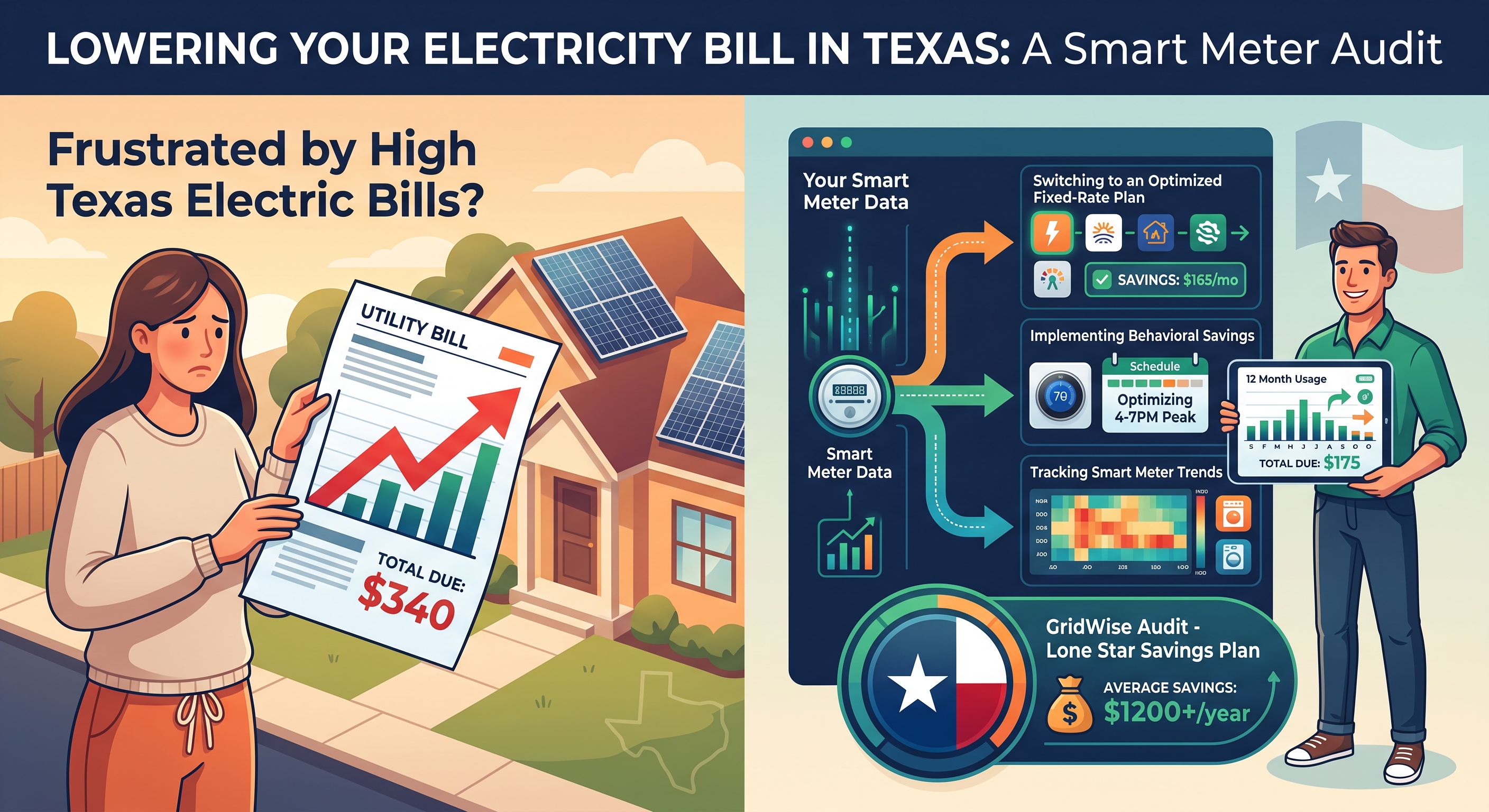
Do not rely on averages. A headline rate or a market trend is not the same as the rate you will actually pay. Your usage pattern, your service area, your solar production, and your battery setup all change the math. A WattTrim audit based on your actual meter data gives a more accurate picture than any average.
Watch rates over time. A single comparison is a photograph. What you need is a time-lapse. If the best plan available to you today costs $92 more per year than it did ten days ago, that is information you want before you commit.
This household's current rate of 9.6 cents per kilowatt-hour has held steady through all three audits. Every alternative plan would increase their annual cost. That is not always the case. But it is the case right now, and only timestamped audits made it visible.
The Bigger Picture
Texas deregulation gives consumers more choices than almost any other state. But choice without visibility is just noise. The gap between what the market reports and what consumers actually experience is where money quietly disappears.
You can also review the current plan database before deciding whether to switch.
The data from these three audits covers just one address in one service area over four weeks. But the pattern is consistent with what WattTrim sees across audits: retail plan pricing moves independently of wholesale trends, and it rarely moves in the customer's favor during peak months.
If you have not checked your rate recently, now is a reasonable time to look. Not because there is a deal waiting. Because knowing where you stand is the first step to not overpaying.
Rates shown are per-kWh averages including delivery charges, based on WattTrim audits of actual Smart Meter Texas usage data for an Oncor-area solar home with battery storage. Plan availability and pricing vary by service area and change frequently. This article is for informational purposes only and does not constitute a recommendation to switch providers.
Put This Knowledge to Work
Compare your current plan against 1,500+ options across all 6 Texas TDU service areas, including exclusive broker-negotiated rates not found on PowerToChoose.org. Always free.
Trim My BillGridWise Audit shows the plans. WattTrim audits your bill to find your savings.
Keep Reading

Frequently Asked Questions
Why can Texas electricity plans get more expensive when ERCOT rates are falling?
Wholesale averages and retail plan prices measure different things. Providers can price fixed contracts for expected summer risk, changing demand, and solar buyback margins even when current wholesale averages are flat or lower.
How quickly can Texas retail electricity plan prices change?
Retail offers can change within days. In the article's three audits of the same Oncor-area home, the best available estimated annual cost increased by $92 in ten days.
Should I use a wholesale electricity rate to choose a Texas plan?
Wholesale data is useful context, but it is not the price you enroll at. Compare current retail offers using your own usage, service area, solar production, and battery setup before making a decision.